From the conversion glossary
Concepts referenced in this article, defined.
How agentic payments and Google's AP2 protocol are changing checkout and what ecommerce brands need to know about AI agent payment authorization and CRO.
 Yuvraj Singh6 min read
Concepts referenced in this article, defined.
 ai ecommerce
How reinforcement learning personalization works for ecommerce - self-learning targeting that improves with every visitor, and how it differs from rules.
 ai ecommerce
A practical guide to voice commerce optimization - how to prepare your product pages, catalog, and UX for Alexa, Siri, and voice-first shopping.
 ai ecommerce
A practical schema markup for AI agents guide - the exact structured data ecommerce stores need so LLMs and shopping bots can read products correctly.
Run rigorous A/B tests and personalize every visit on Shopify or any storefront — no engineers required.
For as long as ecommerce has existed, checkout has assumed one thing: a human is sitting there, physically clicking "Buy Now." Every fraud check, every consent flow, every “are you sure? confirmation” is built around that assumption. Agentic payments break it. When an AI agent is the one clicking buy - sometimes with a human watching, sometimes without - a lot of what checkout optimization used to mean has to be rethought.
This isn't hypothetical. Google, Mastercard, PayPal, Stripe, and dozens of other payment players have already shipped real infrastructure for this. If you run an ecommerce store, it's worth understanding what's actually happening before it shows up in your conversion data as a category you don't recognize.
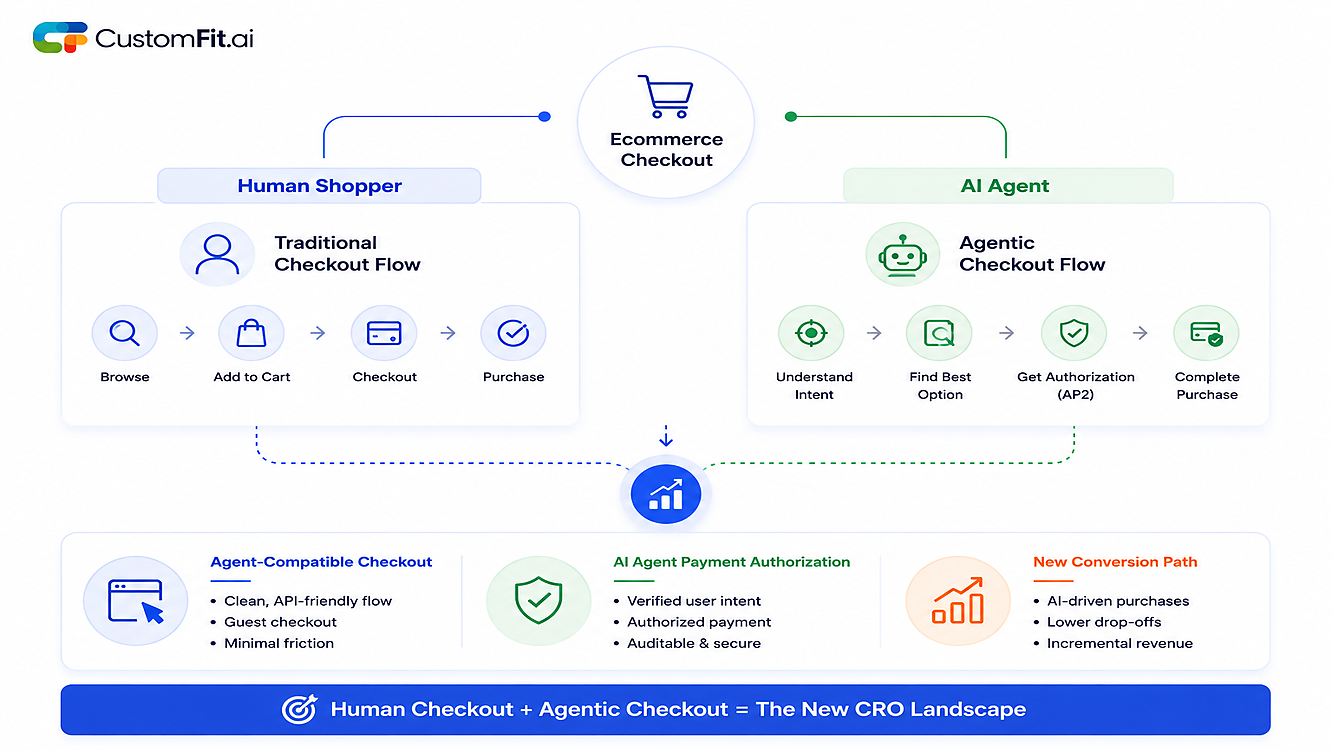
Agentic payments ecommerce refers to transactions where an AI agent - not a human - directly initiates and completes a purchase on a shopper's behalf, using a payment method the shopper has already authorized in advance. The shopper says, "find me the best price on this and buy it," and the agent handles the rest.
The obvious problem this creates: how does a merchant know the agent actually had permission for that specific purchase, at that specific price, and isn't just an AI hallucinating its way through a shopping cart? That's exactly the problem the new agentic checkout protocols are built to solve.
AP2 (Agent Payments Protocol) is Google's open standard for letting AI agents transact on behalf of users, launched in September 2025 with more than 60 partners at launch, including Mastercard, PayPal, American Express, and Coinbase. Google has since donated the protocol to the FIDO Alliance to keep it vendor-neutral as adoption grows.
AP2 works through three signed "Mandates," each a cryptographically verifiable digital contract:
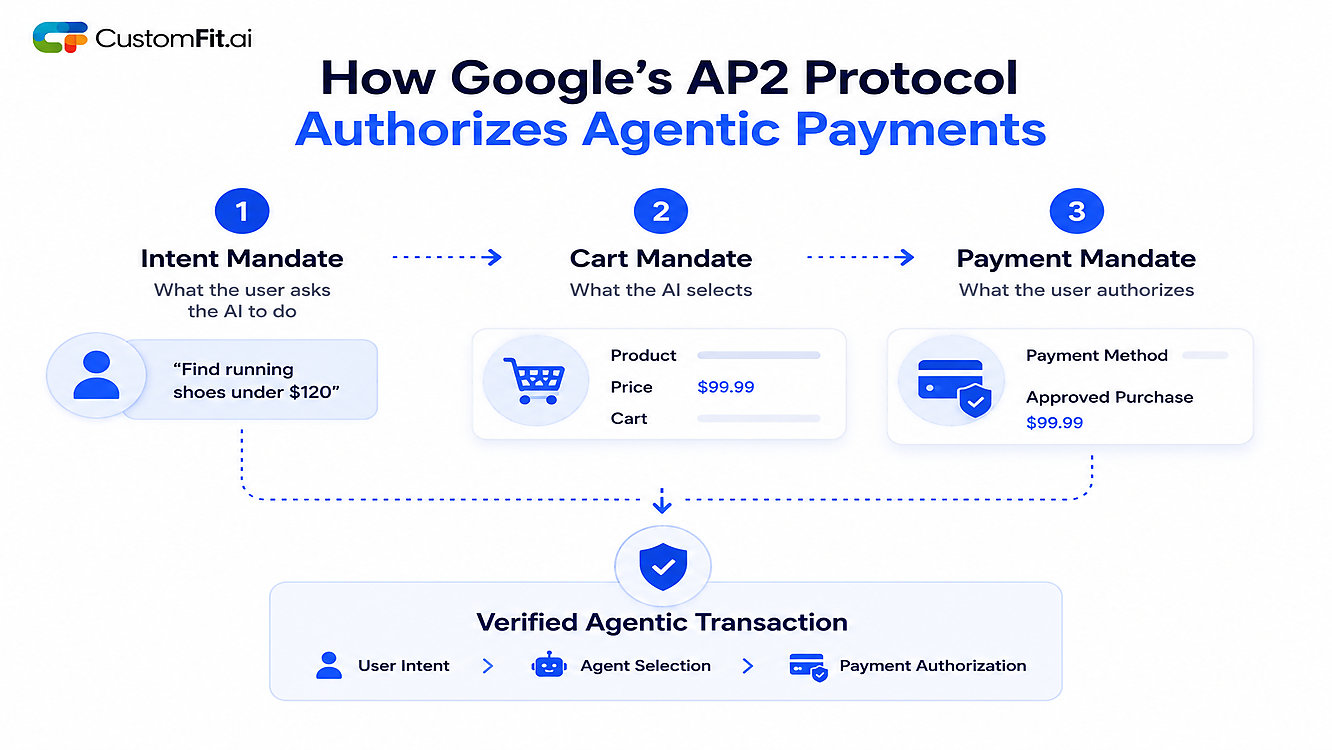
Together, these create what's called a non-repudiable audit trail: a verifiable record of what the user asked for, what the agent selected, and what was actually charged. That record is what lets a merchant trust an agent-initiated order the same way they'd trust one a human clicked through manually.
AP2 is also payment-method agnostic. It supports cards, bank transfers, and stablecoins, since agent transactions can happen at machine speed and in amounts too small for traditional card interchange fees to make sense.
It's tempting to file agentic checkout protocols under "that's a fraud and payments problem." It isn't only that. A few CRO-relevant implications:
Your checkout flow needs an agent-compatible path. A checkout built entirely around form fields designed for human typing speed and human error correction may not map cleanly onto an automated Cart Mandate. Guest checkout, clean API-accessible order flows, and minimal unnecessary steps matter here just as much as they do for human conversion.
AI agent payment authorization changes what “cart abandonment even means.” An agent that builds a cart, gets Intent Mandate approval, but then can't complete a Payment Mandate because your checkout requires an unsupported flow isn't a human who got distracted; it's a structural failure you can actually fix.
Autonomous purchase security becomes a trust signal you can advertise. As agentic commerce grows, merchants who support AP2-style verified transactions may see agents, and the platforms recommending agents, preferentially route orders their way, similar to how "Instant Checkout enabled" already factors into ranking on some AI shopping surfaces.
The biggest one right now is dismissing this as science fiction. AP2 shipped with real partners over a year ago, and adoption has been growing steadily since. The second is assuming "agentic payments" only means crypto or some fringe use case. The mandate structure works across ordinary cards and bank transfers just as much as stablecoins.
Agentic payments ecommerce isn't replacing human checkout; it's adding a parallel path that needs to be trustworthy, auditable, and just as frictionless as the one you've already optimized for people. The merchants paying attention now, even just by cleaning up checkout friction and staying informed on protocol support, will be the ones ready when this channel starts showing up meaningfully in their order data.