From the conversion glossary
Concepts referenced in this article, defined.
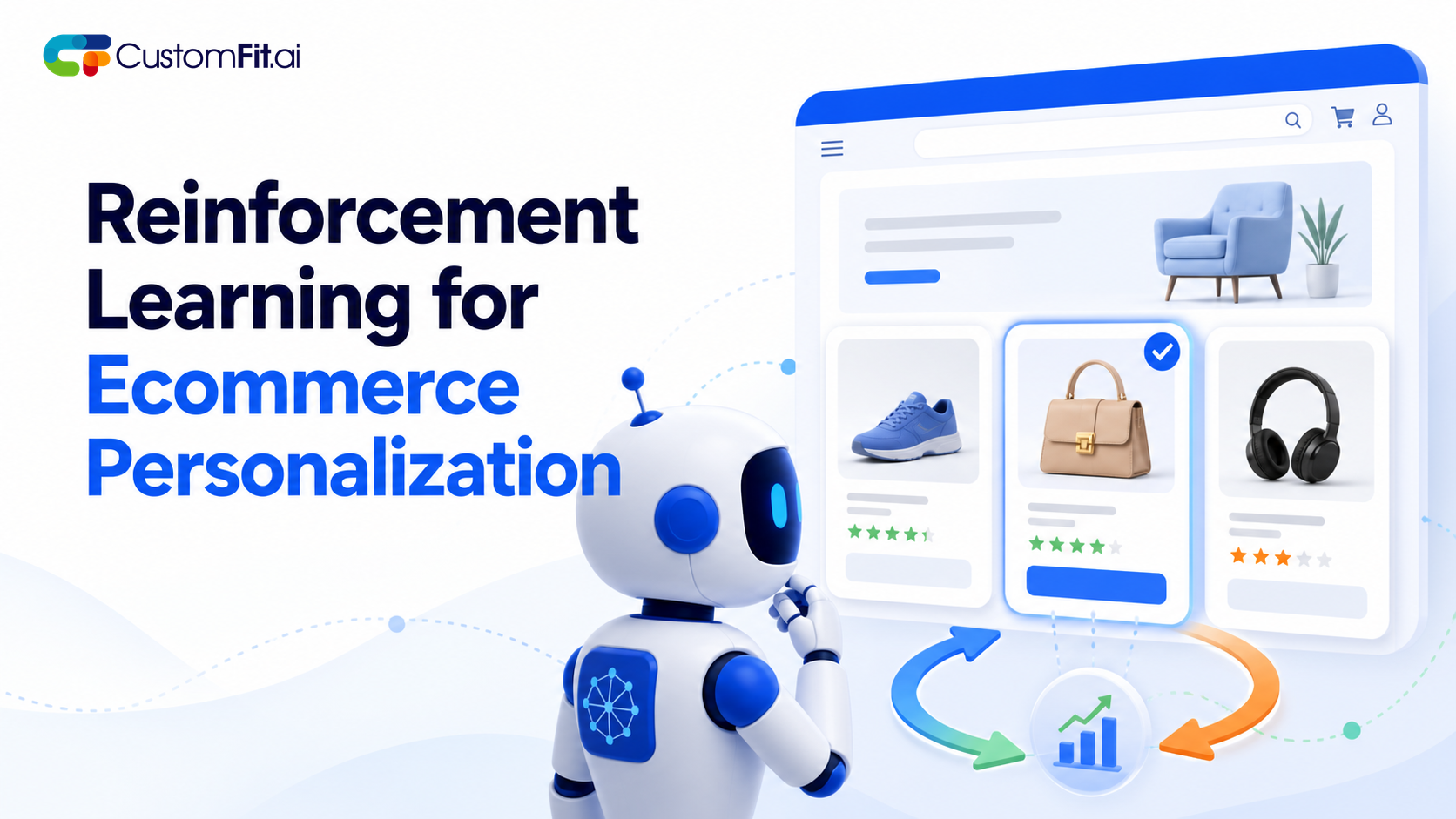
How reinforcement learning personalization works for ecommerce - self-learning targeting that improves with every visitor, and how it differs from rules.
 Yuvraj Singh7 min read
Concepts referenced in this article, defined.
 ai ecommerce
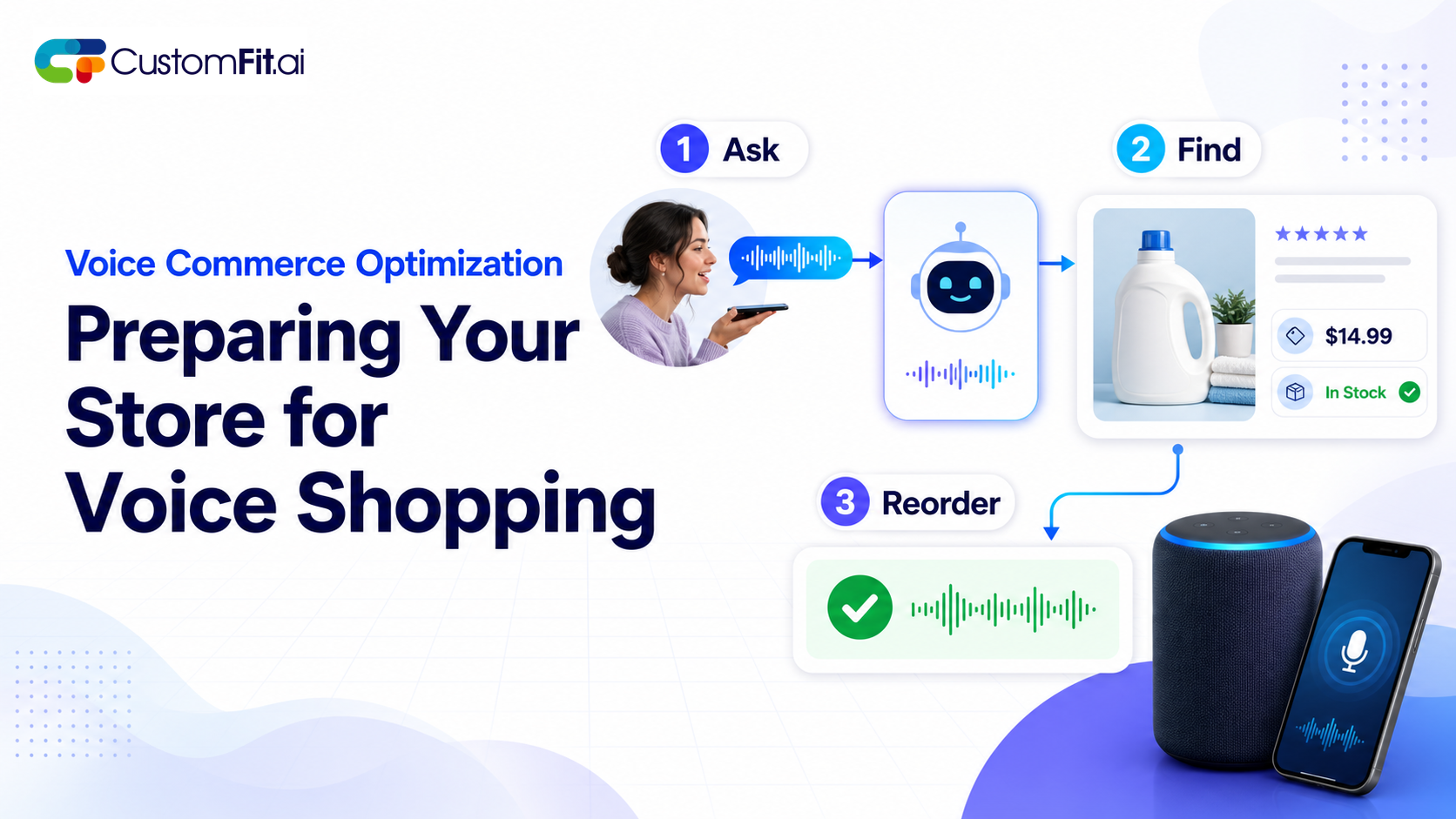
A practical guide to voice commerce optimization - how to prepare your product pages, catalog, and UX for Alexa, Siri, and voice-first shopping.
 ai ecommerce
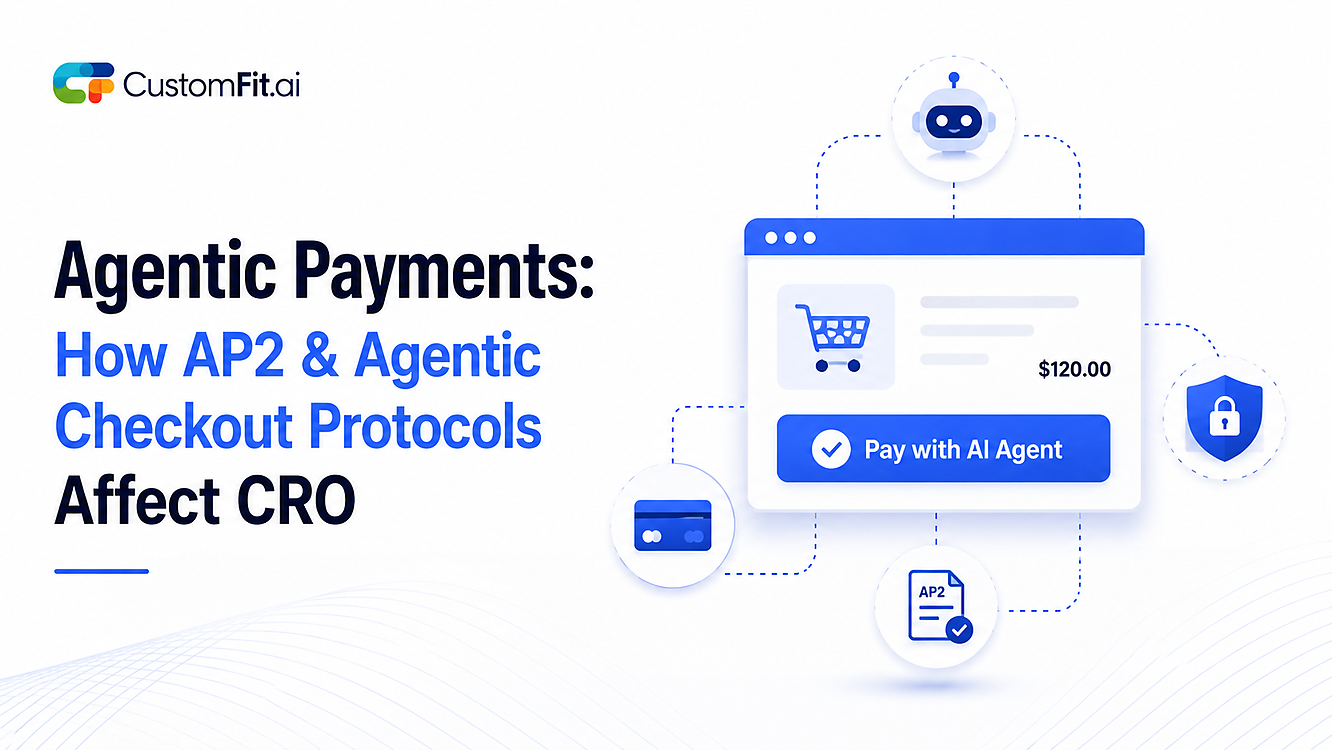
How agentic payments and Google's AP2 protocol are changing checkout and what ecommerce brands need to know about AI agent payment authorization and CRO.
 ai ecommerce
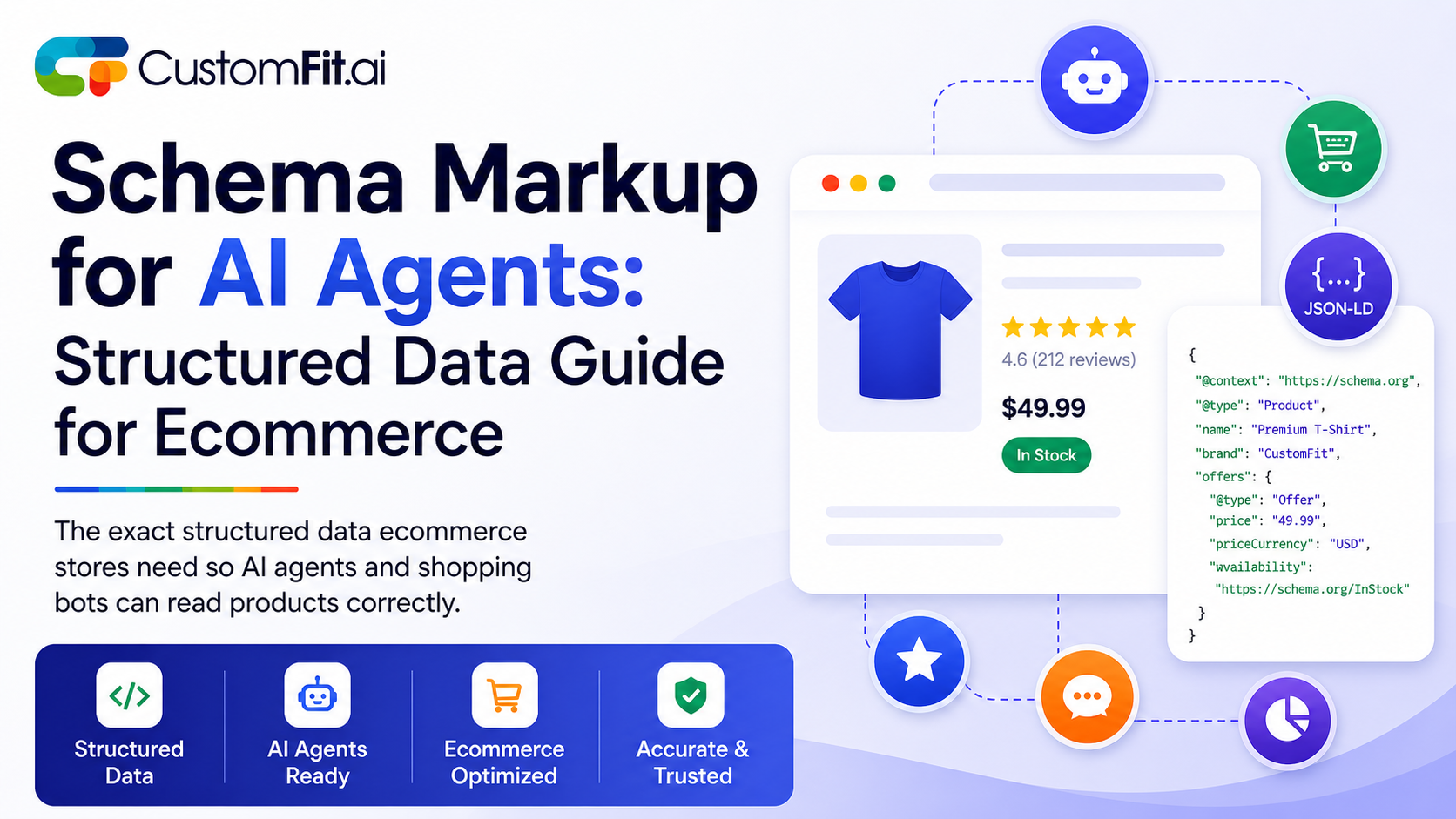
A practical schema markup for AI agents guide - the exact structured data ecommerce stores need so LLMs and shopping bots can read products correctly.
Run rigorous A/B tests and personalize every visit on Shopify or any storefront — no engineers required.
Most personalization on ecommerce sites today runs on rules someone wrote by hand. "If a visitor is from a cold-weather region, show the jacket banner." "If it is a returning visitor's third session, show the loyalty offer." These rules work, but they only work as well as the person who wrote them - and they stay exactly the same until someone remembers to update them.
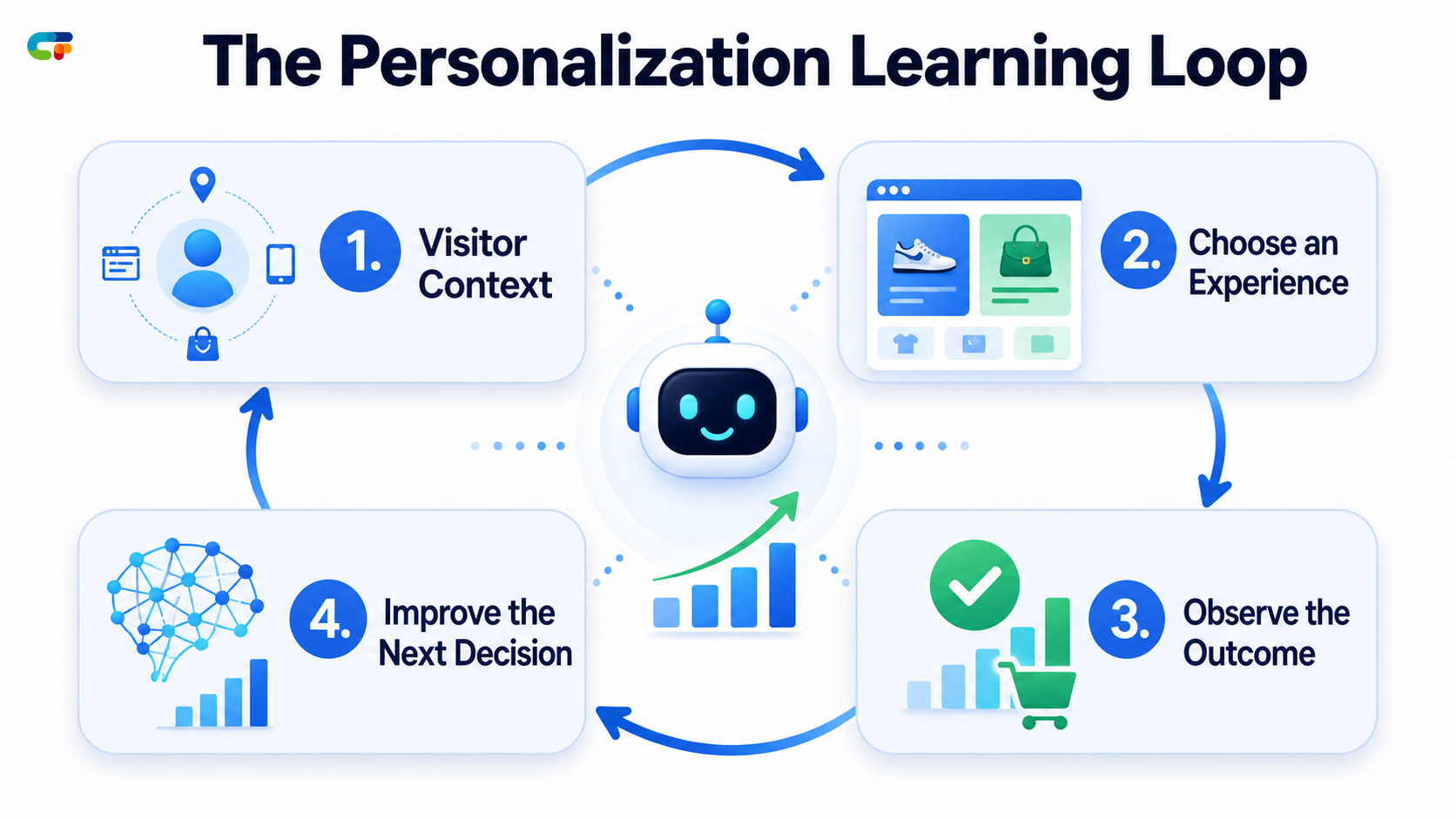
Reinforcement learning personalization takes a different approach. Instead of a fixed set of if-this-then-that rules, the system learns from outcomes - which offer, layout, or recommendation actually led to a conversion - and adjusts its behavior over time without a human rewriting the logic every time.
Reinforcement learning (RL) is a machine learning approach where a system takes an action, observes the result, and adjusts future behavior based on whether that result was good or bad. It is the same basic loop used to train systems that play games or control robots, applied to a narrower commercial problem: which version of a page, offer, or recommendation is most likely to convert a given visitor.
In practice, self-learning ecommerce personalization platforms use RL to treat every visitor interaction as a small experiment. Show variant A to this type of visitor, see whether they convert, feed that result back into the model, and let the probability of showing A versus B versus C shift accordingly - continuously, not just at the end of a fixed testing period.
Rule-based personalization is explicit and predictable. A human decided the logic, so it is easy to audit exactly why a given visitor saw what they saw. Its weakness is that it does not improve on its own. If your assumption about what cold-weather visitors want turns out to be wrong, or stops being right after a season changes, nothing adjusts until a person notices and edits the rule.
Adaptive AI targeting built on RL offers the opposite trade-off. It can pick up patterns a person might never think to write a rule for - a subtle combination of time of day, referral source, and browsing behavior that correlates with a certain offer converting better - but it is less transparent. You often get a result, such as "this segment responds better to variant C," without a fully human-readable explanation of why. That makes the system harder to audit and easier to over-trust.
Most mature personalization programs use both approaches: clear rules for anything where the logic is well understood and legally or brand-sensitive, such as pricing tiers, compliance-driven messaging, and RL-driven targeting for the messier, harder-to-code parts of the experience where a self-learning system can genuinely outperform a fixed rule.
Traditional A/B testing runs in discrete rounds: hypothesize, test, analyze, ship a winner, and move to the next test. Continuous learning CRO built on reinforcement learning collapses that cycle. The system is effectively always testing and adjusting, gradually shifting traffic toward whatever is currently performing best rather than waiting for a fixed test period to end.
This is closely related to multi-armed bandit approaches, which RL-based personalization often builds on. Instead of splitting traffic evenly across variants for a fixed duration, the system dynamically shifts more traffic toward the better-performing option as evidence accumulates, reducing how much traffic gets spent on a clearly underperforming variant.
Product recommendation ordering. Rather than relying on a fixed "customers also bought" rule, an RL-based recommendation engine can learn which ordering or mix of recommendations drives more add-to-carts for different visitor types, then keep adjusting as behavior changes.
Offer and discount targeting. Rather than simply applying an arbitrary discount rule, such as giving every new customer 10% off, an intelligent system can gradually learn when an incentive is likely to change a purchase decision and when offering one would only sacrifice margin.
Homepage and category-page layout. Which hero banner, which category order, and which message works best can vary across segments. RL-based systems can continuously test small variations rather than running one large test and locking in a single winner for months.
Send-time and channel optimization for retention. The same principle applies beyond the website: learning which channel and timing actually drives a repeat purchase for a given customer instead of applying one fixed cadence to everyone.
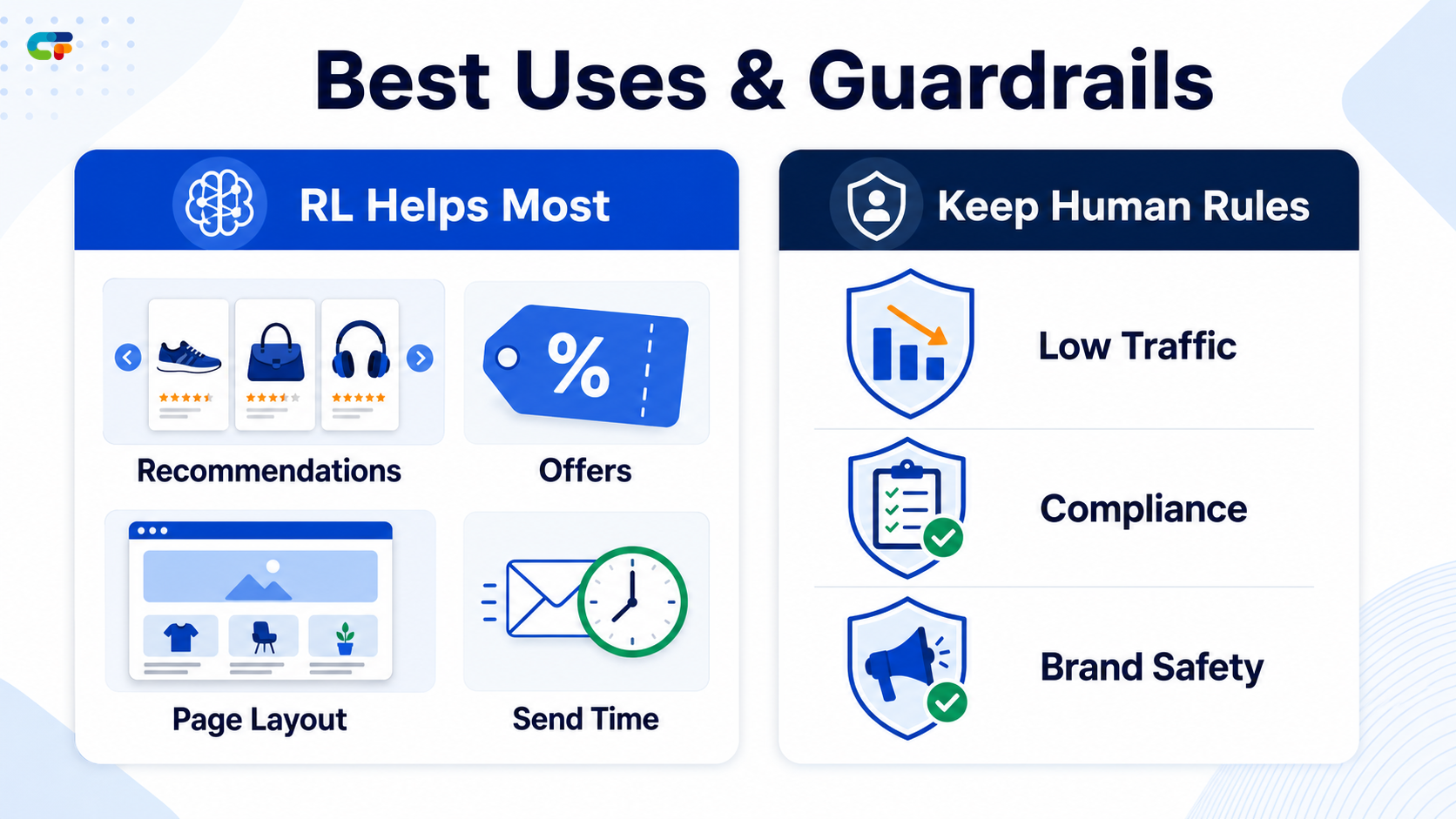
RL-based systems learn from outcomes, so they need enough traffic and conversions to identify a meaningful pattern. A very low-traffic store may not generate enough signal for RL to outperform well-designed rules or simpler Bayesian testing approaches.
If your team cannot understand why the system is making a particular decision, it becomes difficult to distinguish a genuine problem from a result that merely looks unfamiliar. Choose platforms that expose some reasoning, confidence level, or decision history rather than providing only a black-box output.
A poorly designed RL system may sacrifice brand consistency for immediate conversion. For example, aggressive discounting may produce more short-term sales while weakening margin, customer expectations, and brand positioning over time.
The most common mistake is switching on a self-learning system and walking away, assuming it needs no oversight because it is adaptive. It still needs monitoring for the same reasons as any automated system: data-quality issues, seasonal shifts, and unintended consequences do not fix themselves just because the system is designed to learn.
The second mistake is applying RL-driven personalization everywhere at once instead of starting with one well-scoped use case, such as recommendation ordering, and expanding only after the team understands and trusts the results.
Reinforcement learning personalization is not magic. It is a genuinely different, often more effective way to manage the parts of personalization that are too complex or fast-moving for hand-written rules to keep up with.
For most ecommerce teams, the right approach is not choosing RL over rules entirely. It is knowing which parts of the experience benefit from continuous adaptive learning and which are better served by clear, auditable logic written by a person on purpose.