From the conversion glossary
Concepts referenced in this article, defined.
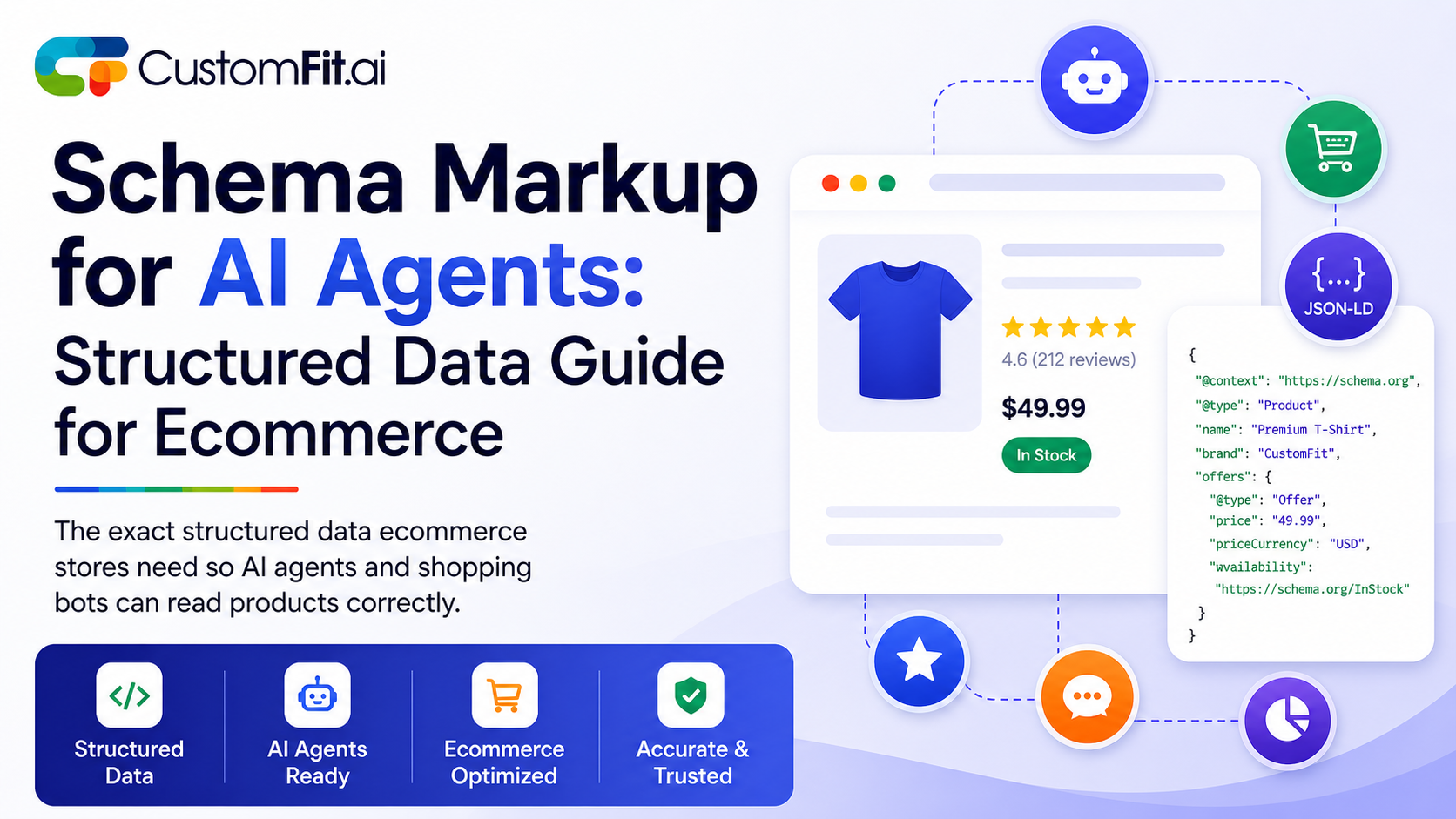
A practical schema markup for AI agents guide - the exact structured data ecommerce stores need so LLMs and shopping bots can read products correctly.
 Yuvraj Singh6 min read
Concepts referenced in this article, defined.
 ai ecommerce
How reinforcement learning personalization works for ecommerce - self-learning targeting that improves with every visitor, and how it differs from rules.
 ai ecommerce
A practical guide to voice commerce optimization - how to prepare your product pages, catalog, and UX for Alexa, Siri, and voice-first shopping.
 ai ecommerce
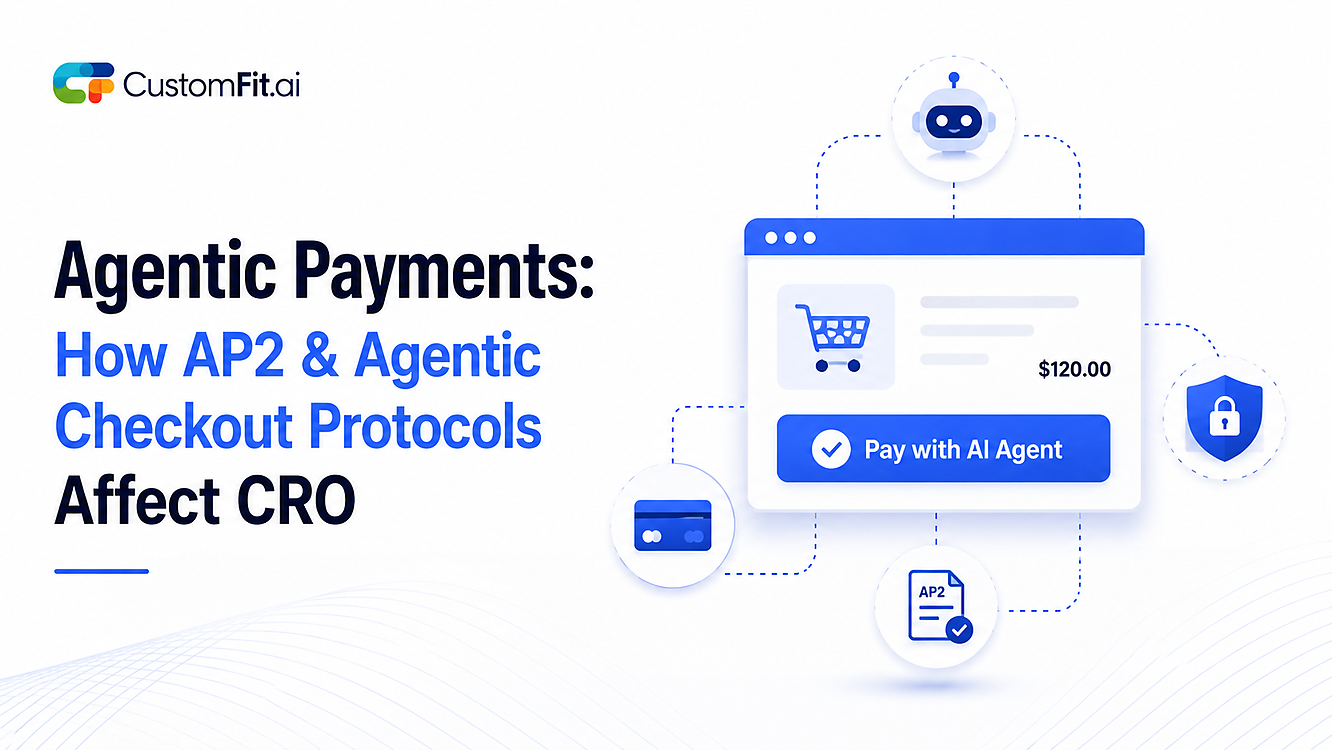
How agentic payments and Google's AP2 protocol are changing checkout and what ecommerce brands need to know about AI agent payment authorization and CRO.
Run rigorous A/B tests and personalize every visit on Shopify or any storefront — no engineers required.
Every ecommerce site already has product pages built for people: a hero image, a price, some persuasive copy, maybe a size chart hidden behind a tab. What most sites don't have is a clean, separate layer of that same information written specifically for machines. That layer is schema markup, and it's quickly become one of the most important pieces of technical SEO you're not thinking about.
Schema markup for AI agents isn't a new technology. Google has used it for years to build rich snippets. What's new is who's reading it now: AI shopping agents, chatbots, and answer engines that need facts in a predictable format, fast, without having to guess at your page layout.
Structured data ecommerce sites use, usually written as JSON-LD, is a block of code that sits in your page's HTML and states facts in a standard vocabulary: this is a Product, its name is X, its price is Y, it's currently InStock, its average rating is 4.6 based on 212 reviews. A human never sees this code. A crawler, a bot, or an AI agent reads it directly.
Without it, an AI agent has to infer your price from wherever it happens to sit on the page - which might be in an image, might change with a JavaScript-rendered sale banner, or might just be formatted in a way the model misreads. With it, there's no guessing involved.
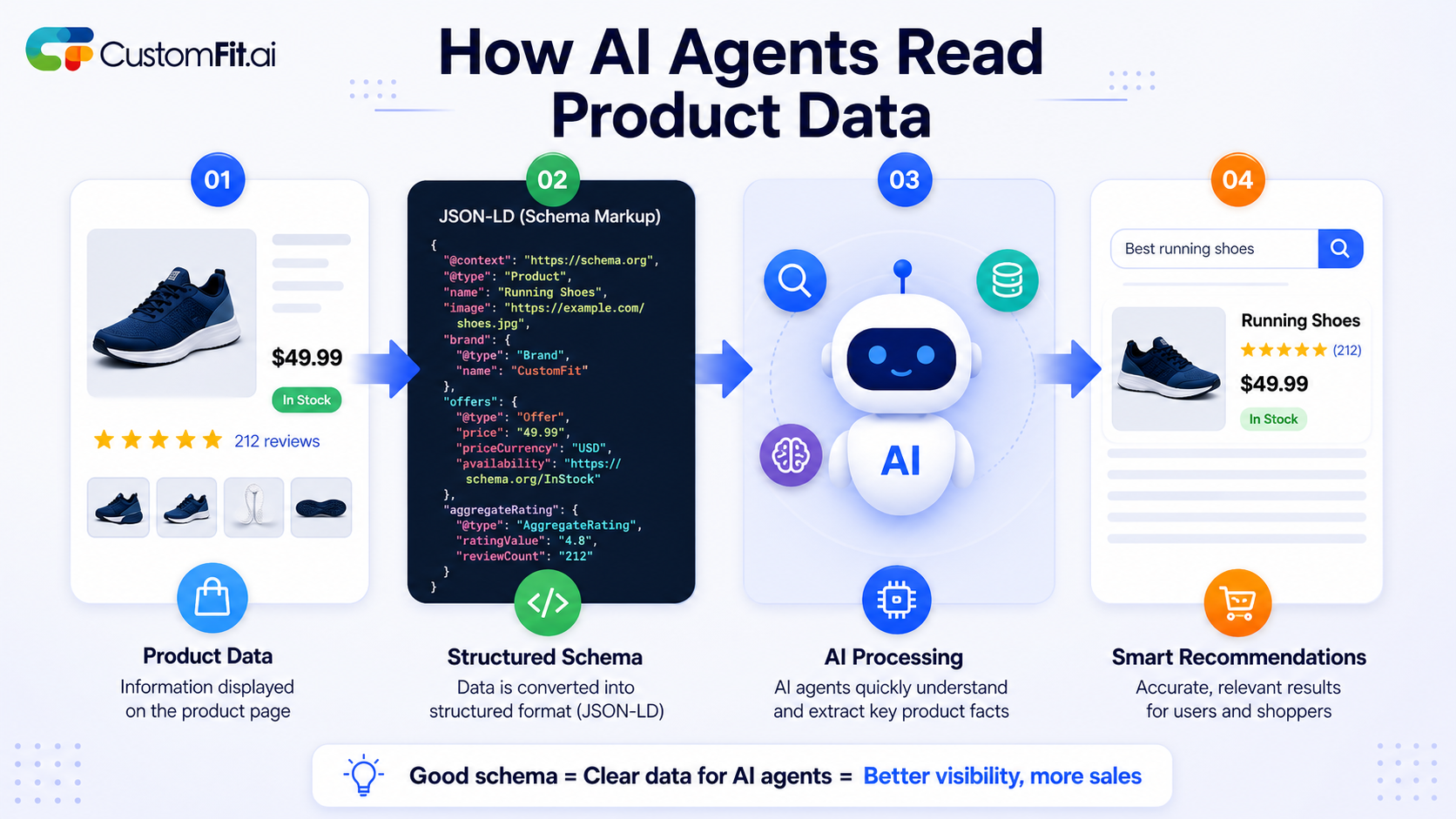
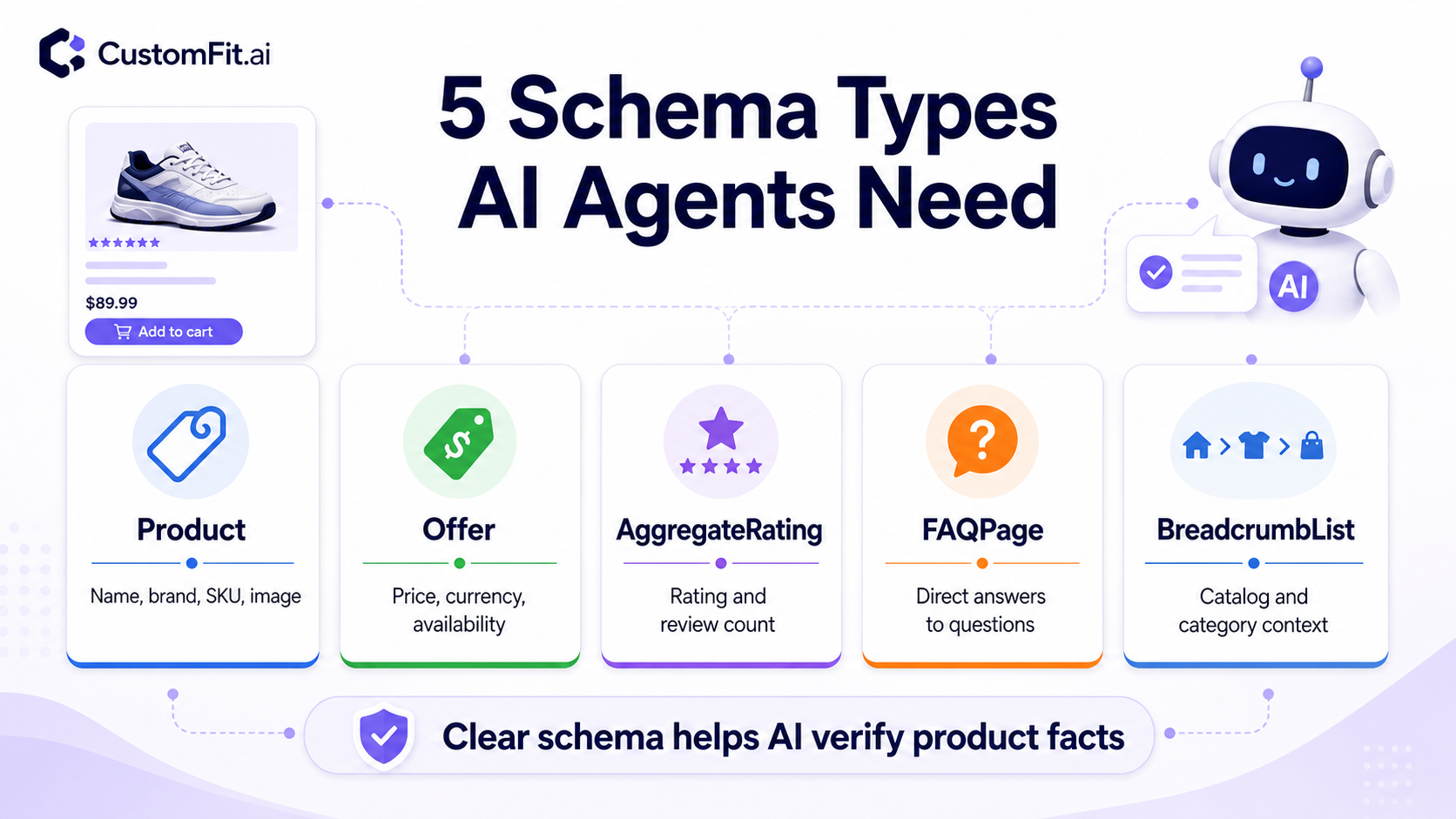
Product schema is the foundation: name, description, brand, SKU, and image, tied together as one structured object.
Offer schema nests inside Product and covers price, currency, availability, and the URL to buy. This is the single most important block for AI-readable product data, because price and stock are exactly what an agent needs before recommending or purchasing something.
AggregateRating and Review schema expose your star rating and review count as machine-readable facts, not just a visual widget. Agents lean on this heavily when comparing similar products.
FAQPage schema marks up genuine Q&A content on your product or category pages, making it easy for an LLM to lift a direct answer to a direct question.
BreadcrumbList schema helps agents understand where a product sits in your catalog, useful when a shopper asks something like "show me other options in this category."
JSON-LD is the format Google and most AI crawlers prefer over the older microdata or RDFa approaches, mainly because it sits in a single script tag and doesn't require you to tag up your visible HTML. A few practical rules:
InStock values that don't reflect real inventory create the exact kind of bad recommendation that erodes trust in AI shopping surfaces.Most ecommerce platforms - Shopify, WooCommerce, BigCommerce - generate baseline Product schema automatically, but it's often incomplete: missing AggregateRating, missing accurate Offer or availability data, or not updating with variant changes. Run a handful of your top product pages through Google's Rich Results Test or Schema.org's validator and see what's actually being read versus what you assume is there.
The most common failure isn't missing schema; it's stale schema. A site adds Product markup once during a redesign and never revisits it, so six months later the JSON-LD still shows an old price or a discontinued variant. The second common mistake is only marking up flagship products and leaving the rest of the catalog with generic or missing schema, which makes an AI agent's picture of your store patchy and inconsistent.
Schema markup for AI agents is quiet, unglamorous work. Nobody visiting your site will ever see this code. But it's the difference between an AI agent confidently recommending your product with the right price and stock status, or skipping it because it couldn't verify the facts fast enough. In a world where more shopping decisions are being made by software reading your page in milliseconds, that's not a minor detail.