From the conversion glossary
Concepts referenced in this article, defined.
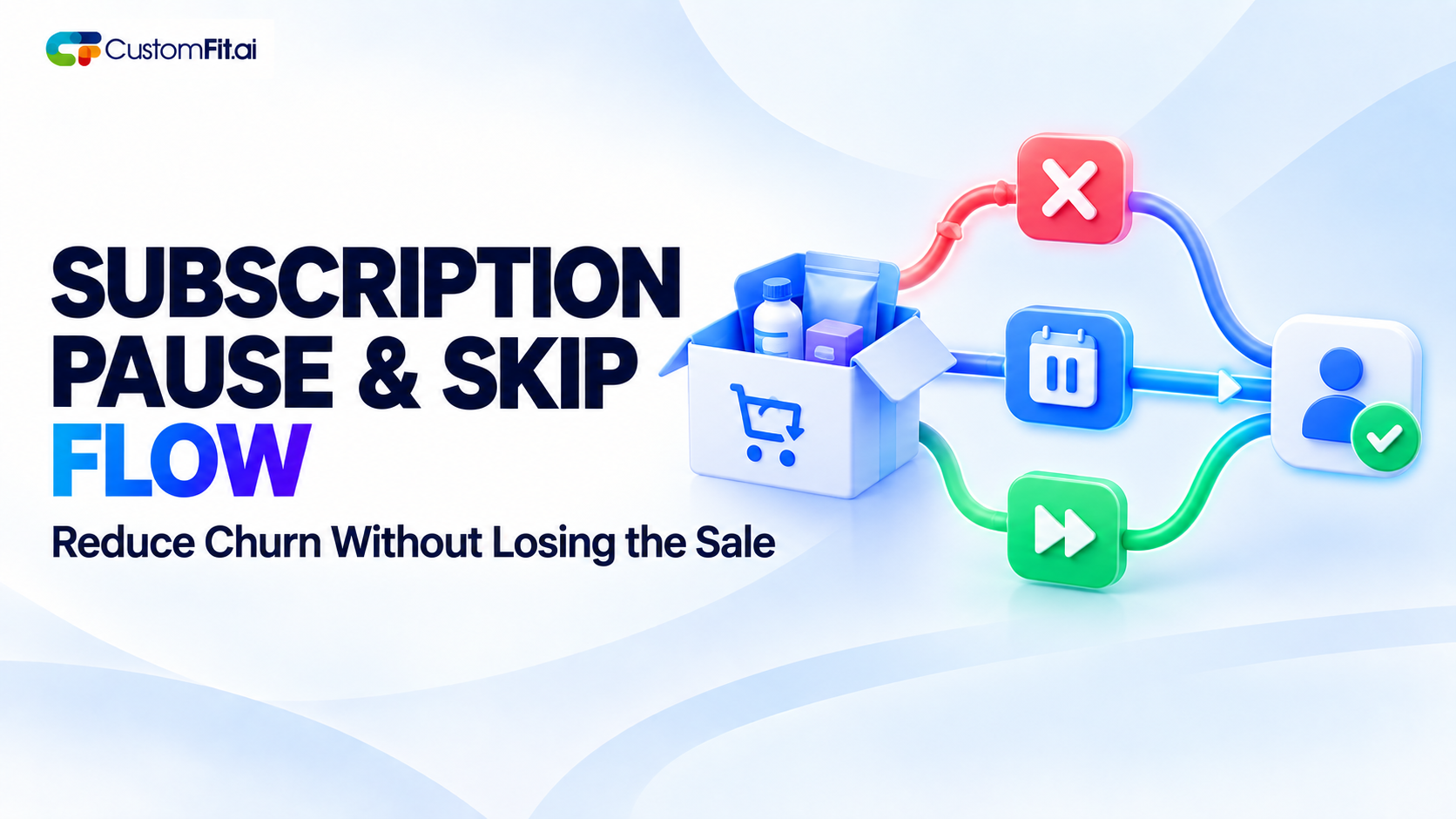
How a well-designed subscription pause skip flow reduces churn without losing the customer entirely. Practical retention flow optimization for D2C brands.
Concepts referenced in this article, defined.
 checkout pricing
Gift flow CRO ecommerce strategies to optimize gift cards, gift wrapping, and the gifting journey so shoppers buying for others actually convert.
 checkout pricing
 checkout pricing
Run rigorous A/B tests and personalize every visit on Shopify or any storefront — no engineers required.
When a subscriber wants to cancel, many brands treat the moment as a battle to win or lose: either the customer cancels, or the brand talks them out of it. That framing misses a common situation. Some people who click "cancel" do not want to stop being customers. They may have too much product left, be traveling next month, or need a different delivery schedule.
What they want is a pause. A subscription pause skip flow gives them a practical middle option. For subscription businesses, it can fix a retention problem by addressing why customers were leaving instead of trying to argue them out of leaving.
Standard subscription cancellation flows are usually built around one choice: keep the subscription as it is or cancel it entirely. Anyone whose need is "not right now, but later" gets pushed toward the more drastic option because the flow offers no accurate middle ground.
That is a design failure, not a customer preference. Many of these subscribers would stay if pausing or skipping were as clear and easy as canceling.
Not all churn has the same cause. A pause or skip flow helps when the problem is timing, not when the customer is genuinely dissatisfied:
A short "why are you canceling?" step can distinguish between these situations. The first three can lead to a pause or skip option. The fourth still needs a clear cancellation path.

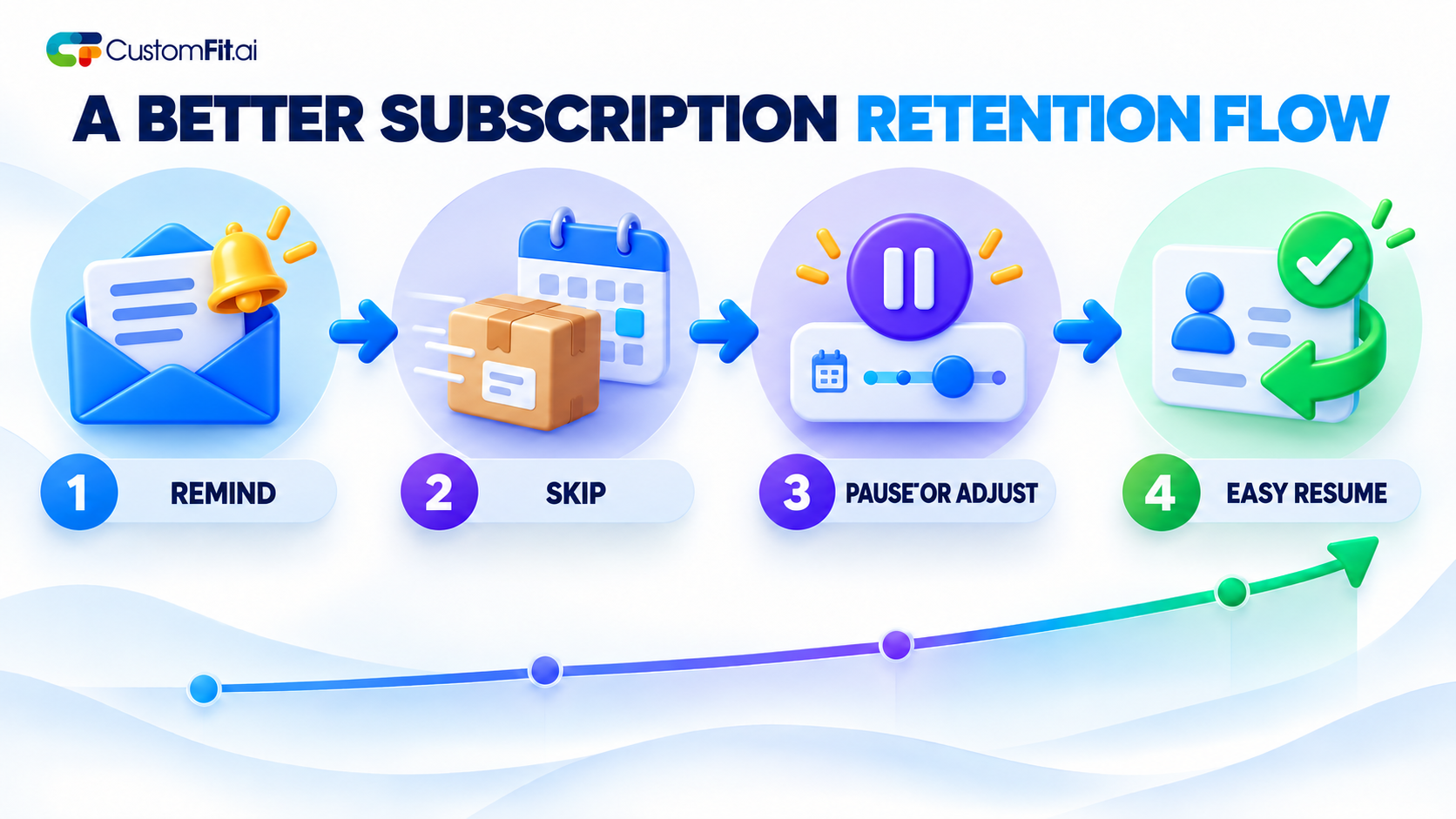
Make pausing and skipping as visible as canceling. If cancel is prominent while pause sits two menus deep, the flow pushes customers toward the outcome the brand wanted to avoid. Present all the real options with equal visual weight.
Let subscribers choose the timeframe. A rigid "pause for exactly one cycle" option will not fit every situation. Let someone skip one shipment, pause for a set number of weeks, or pause indefinitely until they choose to resume.
Make resuming easy. A pause that requires the same friction to restart as a new signup defeats the purpose. A one-click "resume now" control in the account dashboard or a simple email link keeps the return straightforward.
Send a reminder before an automatic restart. A surprise charge after a long pause can turn a temporarily inactive customer into an angry former customer. Tell them before billing or shipping resumes.
For subscriptions such as supplements, consumables, or coffee, skipping one shipment may be the most common need. It should be the easiest option in the flow, not treated like a full pause.
Offer it before the next charge. A pre-shipment reminder email with a one-click "skip this month" link can solve the timing problem before the subscriber reaches the cancellation flow.
Keep the action short. The value of a skip is that it takes less effort than canceling. Requiring a login, several menus, and multiple confirmations makes it technically different but not meaningfully easier.
Explain the effect on billing and delivery. Customers need to know whether the action delays the next charge, removes one charge, or changes only the delivery date. Unclear behavior creates support tickets and erodes trust. State the new billing and shipment dates at the decision point.
Offer a frequency change. Someone pausing because products are piling up may simply be in need for a slower rate of delivery. Adjusting the schedule may solve the problem instead of postponing it.
Ask for a reason and use the answer. A brief cancellation question is not only for routing the flow. It's genuinely useful data for understanding whether churn comes from a fixable timing issue or a product problem that needs separate attention.
Keep the cancellation option available. Hiding it to force a pause tends to backfire, generating frustration and chargebacks instead of genuine retention. It also damages trust for customers who do need to leave.
The first mistake is building a cancellation flow without a pause or skip option. That silently loses subscribers whose need was temporary.
The second is adding a pause option that is harder to use than cancellation. If customers must work to find it or restart later, they may cancel out of frustration anyway.
A subscription pause skip flow reflects what some customers actually want. It removes an artificial choice between continuing unchanged and leaving permanently. The business keeps customers whose problem is temporary, while people who genuinely want to cancel still have a clear way out.