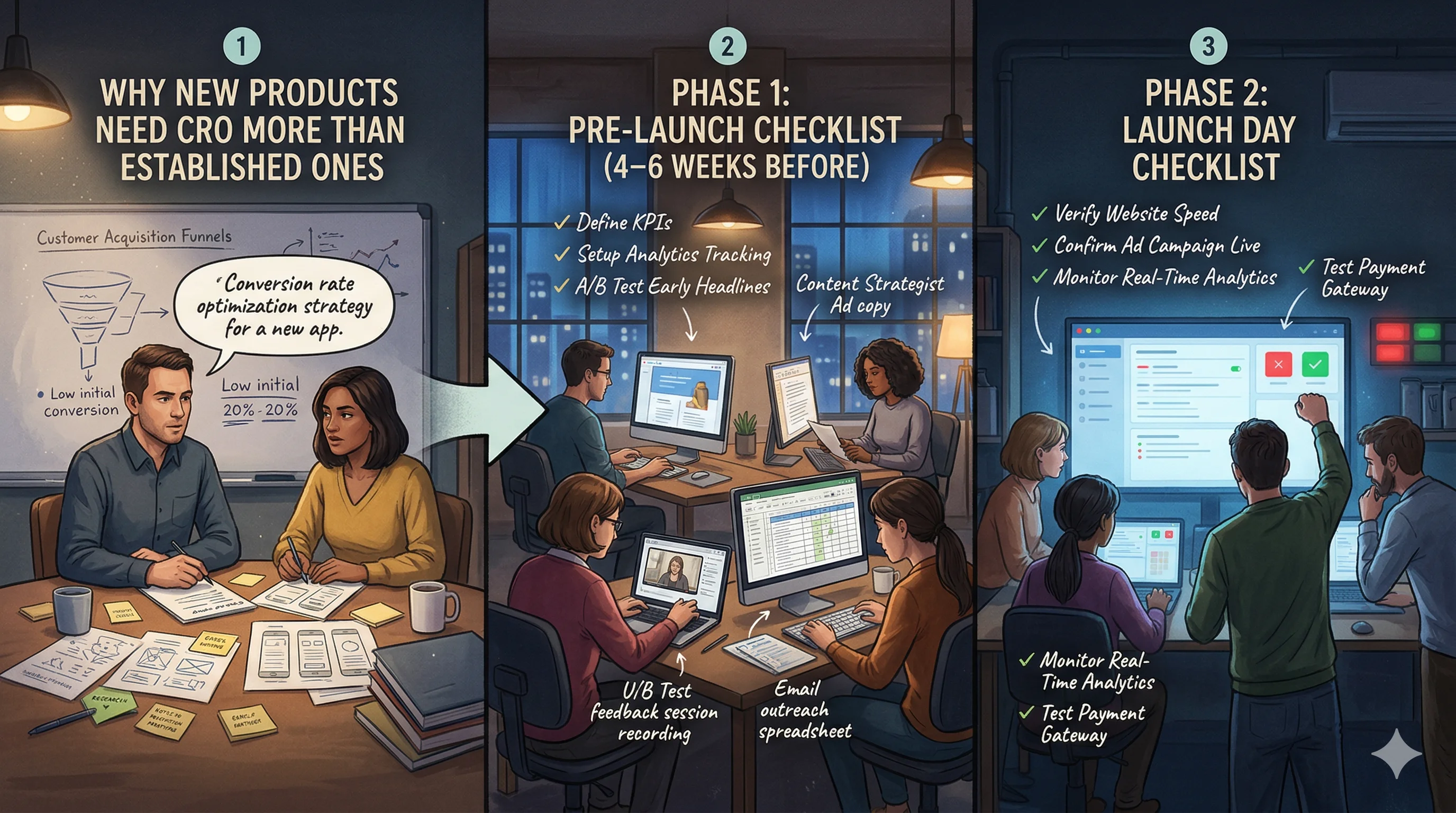
From the conversion glossary
Concepts referenced in this article, defined.
Concepts referenced in this article, defined.
 cro
croPre-order waitlist CRO strategies that convert hype into real revenue - how to design waitlist and pre-order pages that don't lose momentum before launch.
 cro
croFirst purchase experience optimization - practical strategies to turn first-time visitors into buyers, from welcome offers to a smarter new customer funnel.
 cro
croRetail media CRO explained - how to monetize on-site ads and sponsored placements without tanking your conversion rate. A practical balance guide.
Run rigorous A/B tests and personalize every visit on Shopify or any storefront — no engineers required.
CRO for sports and fitness brands means optimizing your Shopify store for buyers who are goal-driven, research-intensive, and often deeply skeptical of exaggerated claims — a combination that makes trust-building and specificity the core CRO levers. Indian fitness D2C brands face a market where supplement awareness is growing rapidly, fitness equipment adoption is accelerating post-pandemic, and buyers increasingly prefer D2C brands (MuscleBlaze, HK Vitals, Decathlon alternatives) over imported options. Converting this motivated but cautious buyer requires proving efficacy, addressing price sensitivity, and making purchase as frictionless as possible.
Understanding the Indian fitness buyer's psychology is foundational to any CRO strategy:
Supplement buyers — Typically 22-35 year old gym-goers, diet-aware, and active on fitness communities (Reddit India's r/IndiaFitness, YouTube fitness channels, Instagram reels). They research ingredient profiles, check third-party testing claims, and compare prices on multiple platforms before buying D2C. Price sensitivity is real but not dominant — they'll pay more for a brand they trust.
Equipment buyers — Range from home gym setups (post-2020 trend) to specialized sport equipment. Higher price points (₹3,000-₹50,000+) mean longer consideration cycles, more comparison shopping, and higher sensitivity to EMI options and return policies.
Fitness apparel buyers — Increasingly fashion-aware, influenced by fitness influencers and athletes. Performance claims (moisture-wicking, compression) are important but aesthetics drive a significant portion of decisions. Size accuracy and easy exchanges are critical.
Fitness buyers, especially supplement buyers, are among the most scientifically literate ecommerce audiences. They check ingredient dosages, look for third-party testing certificates, and can identify underdosed proprietary blends.
What to optimize:
Supplement facts panel prominence: The full nutritional/supplement facts panel should be visible on the product page without requiring a click. Test: supplement facts visible by default vs. hidden behind a "see more" tab.
Third-party testing badges: NSF Certified, Informed Sport, or Lab-tested badges are extremely powerful for protein powder and supplement brands. Test: testing certification banner near product title vs. in description.
Dosage and efficacy language: "3g of Creatine Monohydrate — the clinically studied dose" is more persuasive than "With Creatine." Specific dosage claims with reference to research win trust. Test: clinical dosage language vs. standard marketing copy.
Athlete and expert endorsements: Not celebrity endorsements (fitness buyers are skeptical of paid promotions) but coach recommendations, sports nutritionist quotes, or professional athlete real-use testimonials. Test: professional endorsement with credentials vs. standard customer review.
Fitness motivation is goal-specific. A buyer trying to lose weight has different needs than one trying to build muscle — even if they're both looking at protein powder.
Personalization approaches:
Goal-based homepage segmentation: "I want to: Lose Weight | Build Muscle | Improve Endurance | Just Be Healthier" — a homepage modal or navigation segment that redirects to goal-specific landing pages. Test: goal-segmented vs. standard homepage for first-time visitors.
Goal-specific product bundles: "Weight Loss Stack" (protein + fat burner + BCAA) vs. "Muscle Building Stack" (protein + creatine + mass gainer). Test: goal-specific bundle recommendation on product pages vs. generic "frequently bought together."
Result-based product descriptions: "Helps burn fat during cardio sessions" instead of just listing ingredients. Test: outcome-focused copy vs. ingredient-focused copy.
Fitness buyers trust their community far more than brand claims.
What to optimize:
Before/after transformations: Real customer transformation stories (with appropriate disclaimers) are the most powerful social proof in fitness. Test: transformation gallery on product pages vs. no transformation content.
User-generated video reviews: A real customer demonstrating the product at the gym carries more weight than a professional testimonial. Test: UGC video reviews vs. text reviews on product pages.
Community size with specificity: "Trusted by 3 Lakh+ Indian athletes" or "Used by 50,000+ gym-goers across India." Numbers are more persuasive than vague claims. Test: specific community count badge vs. generic social proof.
Influencer/athlete specificity: Name the influencer or athlete and show their actual use, not just their face. "What [Athlete Name] uses in their pre-workout" as a featured product section.
High-ticket fitness products (equipment, premium supplement stacks) require price justification.
EMI communication:
For products above ₹2,000, prominently showing EMI options significantly reduces price sensitivity. "Only ₹833/month with no-cost EMI on credit cards" next to a ₹2,499 price is more persuasive than the price alone. Test: EMI price display vs. standard price only.
Value framing:
"Rs. 2,499/month of gym membership vs. ₹14,999 for a home gym setup that pays back in 6 months." For home gym equipment, comparison-based value framing reduces price sensitivity. Test: value comparison frame vs. standard product description.
Bundle pricing:
Supplement stacks are often more economical per-gram than individual products. Show the per-serving cost prominently. Test: per-serving cost displayed near price vs. total price only.
Returns in fitness apparel are disproportionately driven by sizing issues.
What to optimize:
Size guide with Indian body type reference: Many fitness apparel brands use international size charts. An India-specific size guide with measurements in centimeters, with notes on fit (slim-fit vs. regular) for Indian body proportions, reduces returns and increases purchase confidence.
Size recommendation tool: "Enter your measurements — we'll recommend your size." Test: size recommendation tool vs. standard size guide table.
Video size/fit guide: A 30-second clip showing the product on different body types in your target size range. Test: fit video vs. standard size guide.
Fitness buyers are cross-platform shoppers who compare prices on Amazon, Flipkart, and brand sites. Your checkout needs to make D2C the obvious choice.
D2C advantages to highlight in checkout:
COD optimization: Fitness supplements are a category where D2C brands see significant COD orders, especially from tier-2 cities. Ensure COD is prominently available and consider offering COD customers a small incentive to switch to UPI ("Pay via UPI — save ₹50").
New Year (January): The highest fitness intent month. Test resolution-focused messaging ("Start 2026 strong — your first order ships free") vs. standard messaging. Conversion rates spike in January; optimize to capture the peak.
Pre-summer (March-May): "Summer body" intent peaks. Test body transformation focus vs. general fitness focus on hero banners.
Festive gifting (October-November): Fitness gift packs (supplement boxes, resistance band kits) as gifting products with premium packaging. Test gift-focused landing pages and bundles.
Related reading: CRO Pillar | CRO for Pet Products | A/B Testing Trust Badges | Session Recording Analysis | User Behavior