From the conversion glossary
Concepts referenced in this article, defined.
Limited drop CRO strategies for flash launches — how to design a drop page that converts real hype into sales without the site (or shoppers) melting down.
Concepts referenced in this article, defined.
 cro
croProduct quiz CRO for ecommerce — how to design a guided selling quiz that actually increases conversion instead of just adding a fun distraction.
 cro
croMulti language website CRO goes beyond translated text - currency, trust signals, and local buying habits. A practical guide to real ecommerce localization.
 cro
croPre-order waitlist CRO strategies that convert hype into real revenue - how to design waitlist and pre-order pages that don't lose momentum before launch.
Run rigorous A/B tests and personalize every visit on Shopify or any storefront — no engineers required.
A limited drop is supposed to feel exciting, not broken. But the exact conditions that make a drop work — a huge spike of simultaneous traffic, real scarcity, and a countdown everyone's watching — are also the conditions most standard ecommerce sites are least prepared to handle well. A site that converts perfectly well on a normal Tuesday can fall apart in the first ninety seconds of a drop, and that failure is rarely about total capacity. It's usually about specific, fixable CRO decisions made in advance, or not made at all.
Limited drop CRO is about designing deliberately for that compressed, high-intensity window — not just hoping your normal site holds up.
Most conversion optimization assumes a relatively steady, predictable flow of traffic, where you can run a clean A/B test over a couple of weeks and draw a confident conclusion. A flash launch compresses everything into minutes. There's no time to iterate mid-drop, no time to fix a confusing checkout step once shoppers are already there, and a single point of friction that would normally cost a small percentage of conversions can cost the entire inventory's worth of goodwill in one event.
This means flash launch website optimization has to happen almost entirely before the drop starts, through careful pre-launch testing and preparation rather than reactive fixes during the event itself.
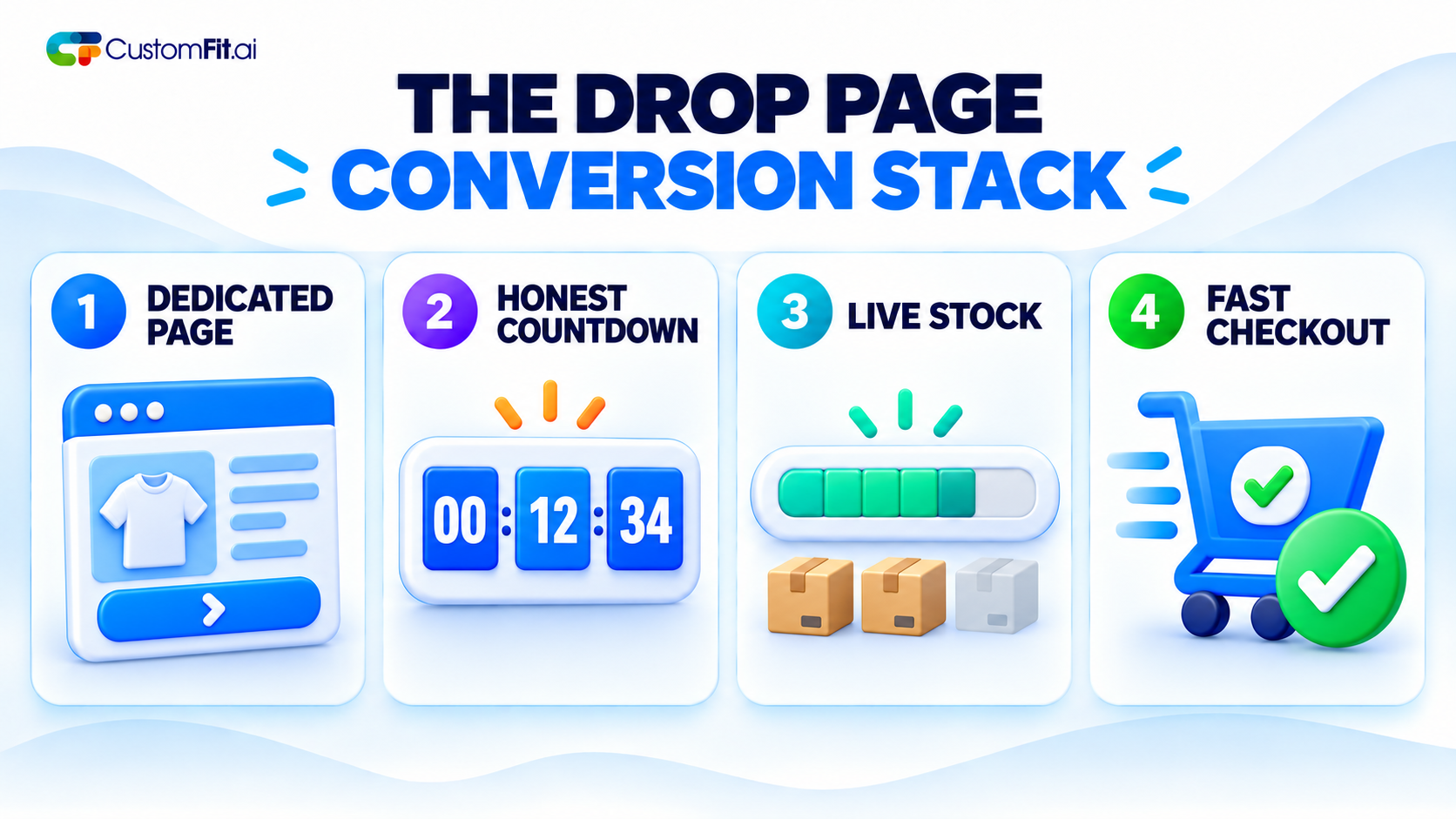
Build a dedicated drop page, not a repurposed product page. A standard product template wasn't designed for the specific information a drop shopper needs urgently — countdown, real-time stock status, and a clear, singular path to purchase. A purpose-built drop page keeps all of that front and center without the usual page clutter competing for attention.
Make the countdown honest and precise. A countdown timer that's slightly wrong, or one that resets unexpectedly, damages trust exactly when shoppers are primed to act fastest. Test your countdown logic thoroughly before launch — this is one of the worst places for a technical bug to surface live.
Show real stock status, updated in real time. Nothing kills hype release conversion faster than a shopper successfully adding an item to cart, only to be told at checkout that it's already sold out. If your system cannot refresh stock quickly enough to avoid this, consider a waiting room or queuing strategy while keeping the experience clear and efficient.
Simplify checkout more aggressively than usual for this event. Every field which is not really necessary, every upsell you've implemented, and every added point of friction becomes more dangerous when buyers are competing for limited stock. Shoppers are more impatient than usual and may abandon at the first obstacle.
Don't inflate scarcity beyond what's genuinely true. If your "only 50 left" counter doesn't move for twenty minutes during active sales, sharp shoppers notice, and the perceived manipulation damages trust well beyond the single drop. Real scarcity, communicated honestly, is more persuasive long-term than exaggerated scarcity that gets caught.
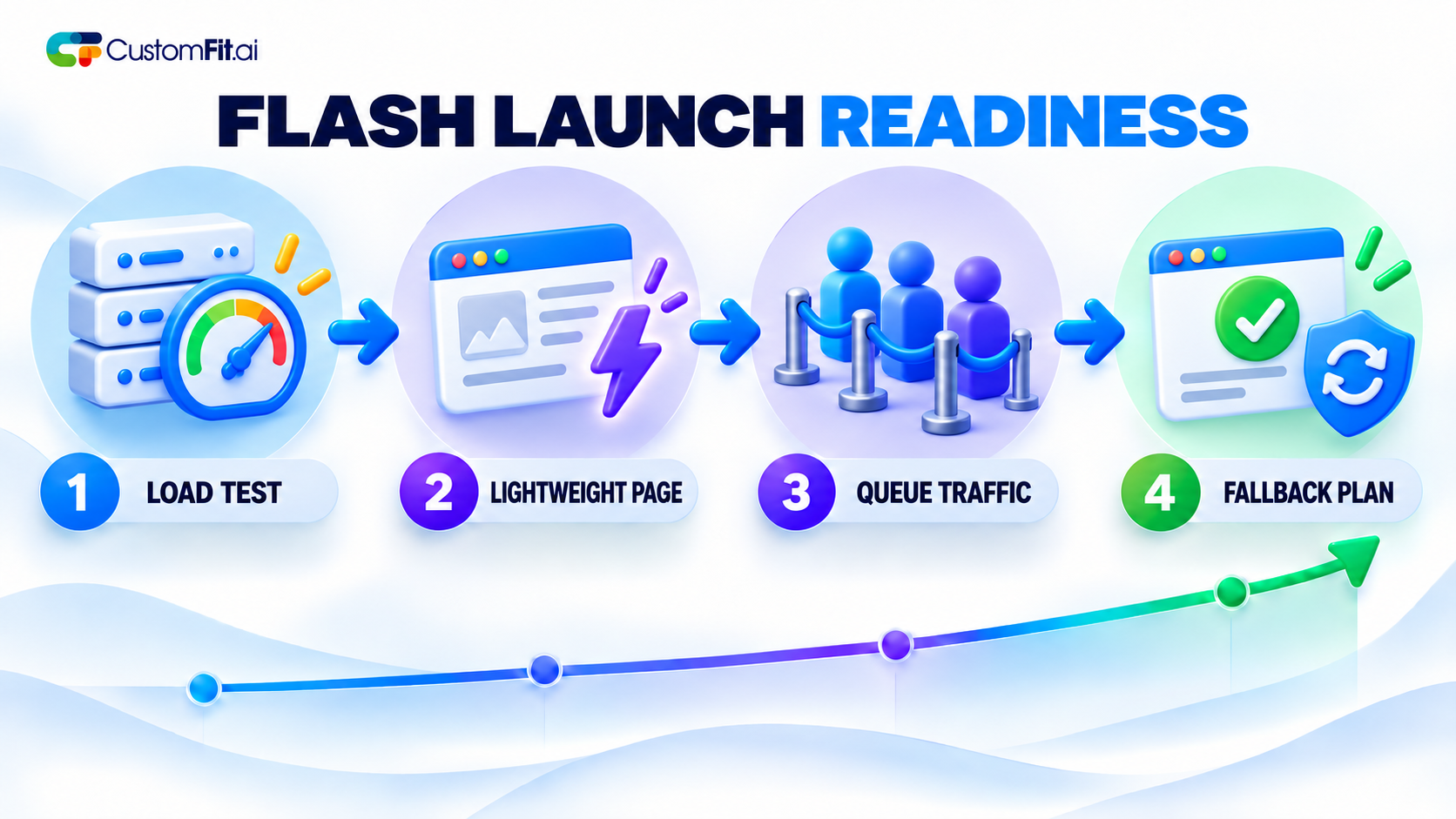
Consider a queue or waiting room for genuinely high-demand drops. An orderly queue can prevent a flood of traffic from overwhelming the buying process. It also improves perceived fairness and reduces the risk of technical failures caused by too many simultaneous purchase attempts.
Communicate what happens if someone misses out. A waitlist for the next restock, or a clear statement about when the next drop will happen, converts some disappointment from a sold-out event into future anticipation rather than lost goodwill.
Load test before the actual event, not during it. A drop page that hasn't been stress-tested under simulated concurrent traffic is a real conversion risk hiding as a technical one. A slow or crashing page during peak demand is the worst possible outcome for a launch you spent weeks building hype for.
Keep the page as lightweight as possible. Heavy images, unnecessary scripts, and third-party ad tech all add load time that matters more during a traffic spike than during normal browsing. Trim aggressively for the drop page, even if your standard product pages carry more.
Have a rollback or fallback plan ready. If something does break, a clear, honest status message with an estimated fix time and appropriate compensation, such as extended access or priority for genuinely affected customers, protects trust far better than a silent failure or generic error page.
The most common mistake is treating a flash launch like a bigger version of a normal product launch, without pressure-testing the page and checkout flow under realistic concurrent-traffic conditions beforehand.
The second is manufacturing scarcity that isn't real. A stock counter that doesn't reflect live inventory is a trust risk that tends to surface publicly, especially among the engaged, detail-oriented shoppers most drops attract.
Limited drop CRO succeeds or fails almost entirely in the preparation, not in the moment. A dedicated, load-tested drop page, honest real-time scarcity, and an aggressively simplified checkout separate a launch that converts hype into sales from one that converts hype into frustrated customers and a crashed site.
The excitement of a drop is an asset. The job of CRO here is making sure your infrastructure and page design don't waste it.