From the conversion glossary
Concepts referenced in this article, defined.
Pre-order waitlist CRO strategies that convert hype into real revenue - how to design waitlist and pre-order pages that don't lose momentum before launch.
Concepts referenced in this article, defined.
 cro
croFirst purchase experience optimization - practical strategies to turn first-time visitors into buyers, from welcome offers to a smarter new customer funnel.
 cro
croRetail media CRO explained - how to monetize on-site ads and sponsored placements without tanking your conversion rate. A practical balance guide.
 cro
croAI Overviews and zero-click search are reshaping how shoppers find products. Here's the real ecommerce impact, and how to adapt your conversion funnel.
Run rigorous A/B tests and personalize every visit on Shopify or any storefront — no engineers required.
A waitlist can feel like a win the moment it fills up - thousands of signups, a flood of "notify me" clicks, a product that looks like it's about to sell out before it even exists. Then launch day arrives, the emails go out, and only a small fraction of that list actually buys. The hype was real. The conversion wasn't.
Pre-order waitlist CRO exists to close that gap. A waitlist isn't a finish line; it's the start of a second funnel, and most brands only optimize the first one (getting the signup) while leaving the second one (turning that signup into an order) almost entirely to chance.
Signing up for a waitlist is a low-commitment action: an email address, maybe a click. That's exactly what makes it easy to collect and easy to lose. Between signup and launch, interest naturally decays: people forget, get distracted by something else, or simply lose the urgency that made them sign up in the first place. Waitlist-to-purchase conversion depends entirely on how well you manage that gap, not just how big the list grows.
The mistake most brands make is treating the waitlist number itself as the success metric. A waitlist of 10,000 that converts at 3% is worse than a waitlist of 3,000 that converts at 15%, and the second number is usually the one that's actually within your control to improve.
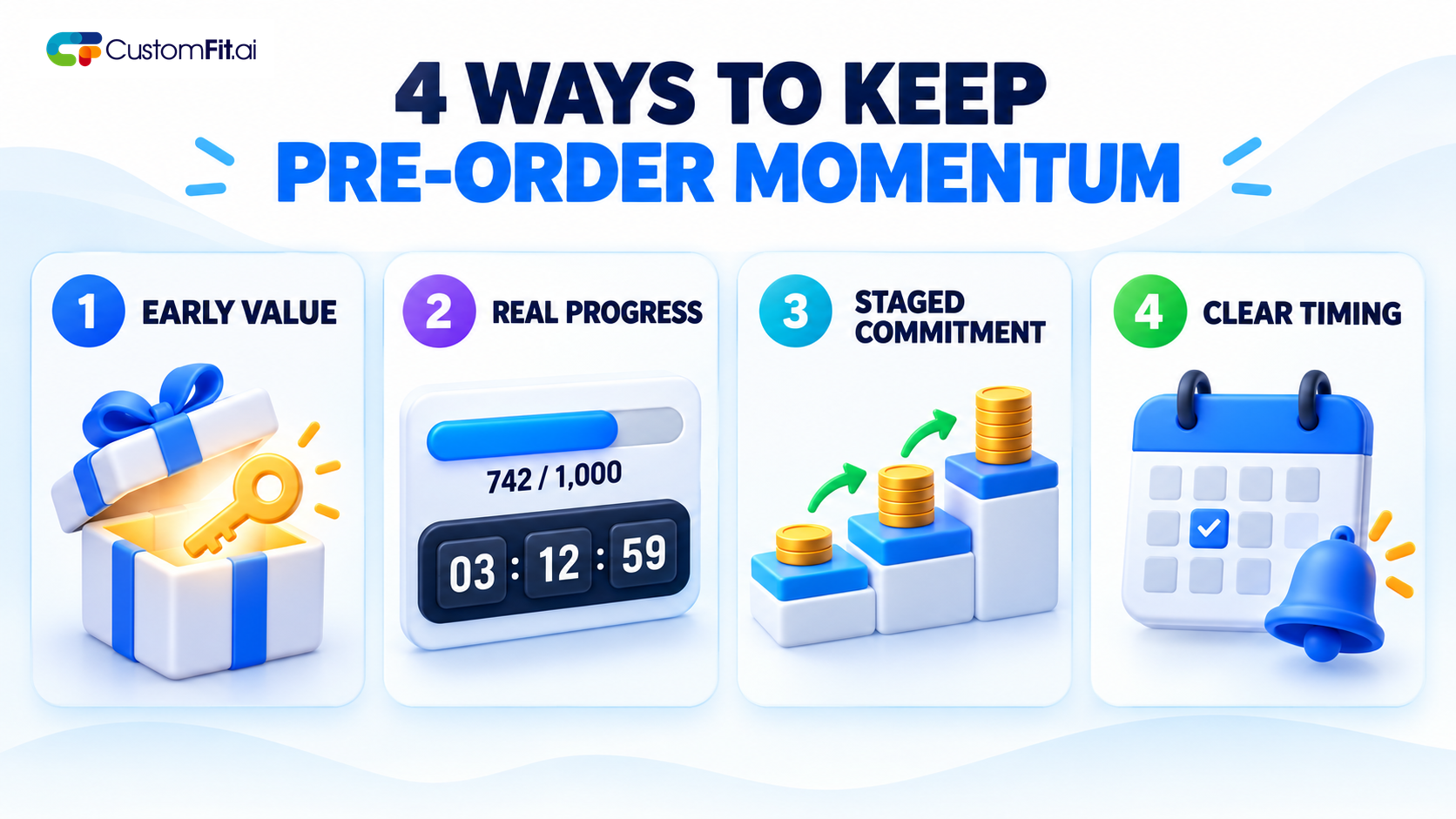
Make the value of joining early explicit, not implied. "Join the waitlist" tells someone nothing about why they should bother. "Reserve early access and lock in launch pricing" gives them a concrete purpose tied to the eventual buy, not simply interest.
Show real progress, not vague hype. A visible counter ("2,847 people ahead of you have joined"), a countdown to launch, or a stock/quantity indicator for a limited pre-order run all create a sense of real momentum a shopper can track, which does more for pre-order page optimization than generic excitement copy ever will.
Ask for commitment in stages, not all at once. Some of the highest-converting pre-order flows don't ask for a full purchase immediately; they move a visitor from email signup, to a small refundable deposit, to full payment. At each point in the process, you refine genuine intent until you arrive at a small, easy request at the end.
Be clear about timing expectations. General "coming soon" approaches reduce trust as time goes on. A specific date, or at minimum a specific update cadence ("we'll email you every two weeks with progress"), keeps people from quietly losing interest in the silence.
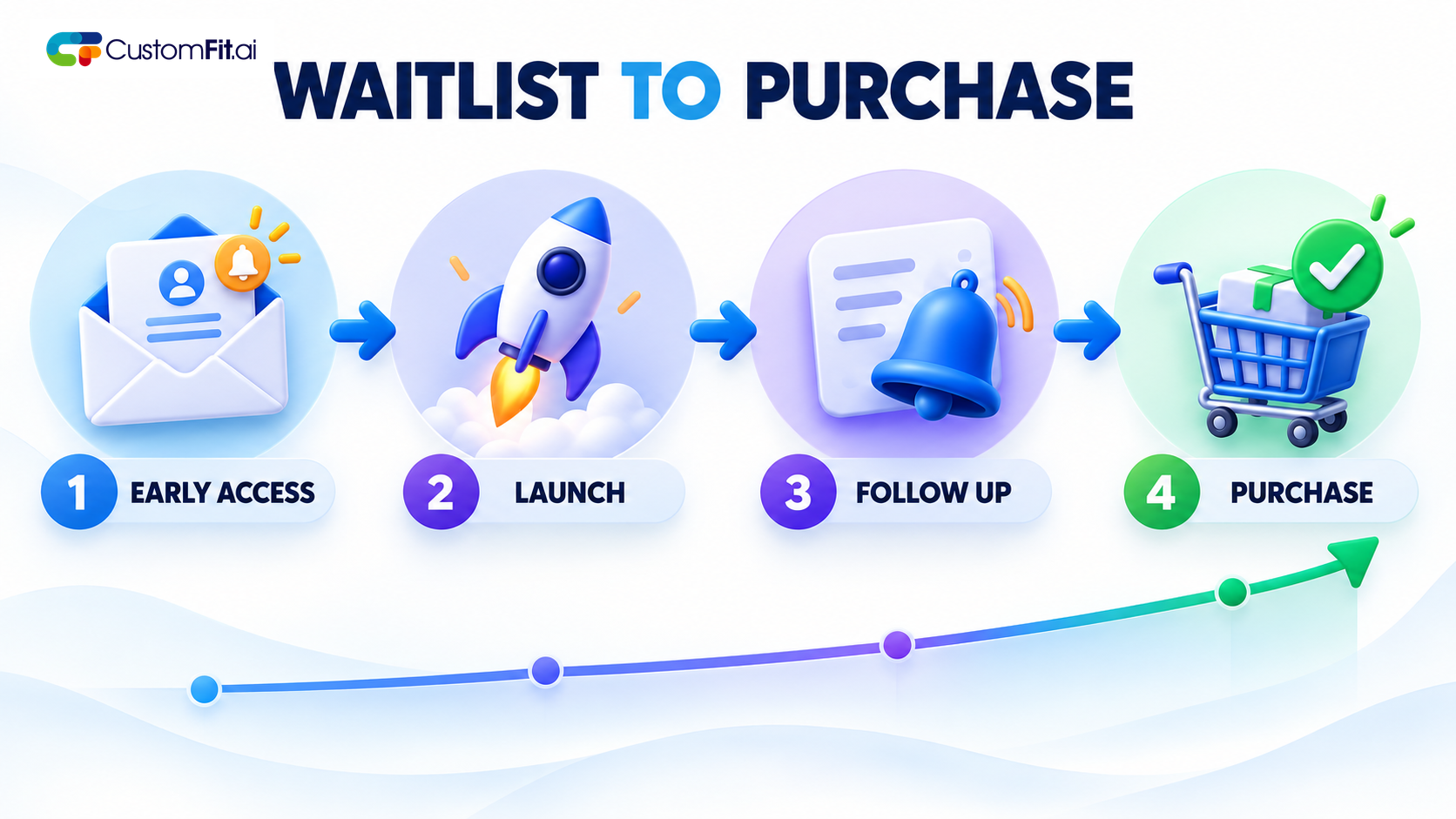
Don't send one email and hope. A single launch announcement competes with everything else in someone's inbox that day. A short sequence, an early-access heads-up, the actual launch, and a follow-up for anyone who didn't open the first two recovers a meaningful share of people who simply missed the first message.
Give the waitlist a real, time-limited advantage. Early access windows, exclusive first-batch stock, or waitlist-only pricing all give people a genuine reason to act now rather than "maybe later." Without that, being on the waitlist and just discovering the product could look identical, which erodes the whole point of building one.
Reduce friction the moment they click through. After weeks of anticipation, a slow-loading page, an out-of-stock size with no clear alternative, or a checkout that asks for information you already collected during waitlist signup will cost you a share of your most interested buyers at the worst possible moment.
Segment by signup recency and behavior. Someone who joined the waitlist the week before launch is a very different prospect from someone who joined six months earlier and never opened a single update email. Treating both identically wastes the opportunity to re-engage cooling interest differently from converting hot, recent signups.
Scarcity works because it's a genuine constraint: a small first production run, limited raw materials, or a capacity-limited service. It stops working, and starts damaging trust, the moment shoppers sense it's manufactured ("still 3 left!" that's been static for a week). Limited drop conversion strategy depends on scarcity being real and clearly communicated, not performed. If your production run genuinely sells out, say so plainly and open a second waitlist for the next batch. That's a legitimate reason to build hype again, not a trick.
The most common mistake is measuring waitlist success purely by signup volume, without ever tracking what percentage actually converts at launch. That blind spot means brands keep investing in list growth while leaving the much higher-leverage conversion gap completely unaddressed.
The second is going silent between signup and launch; a waitlist that hears nothing for two months has effectively forgotten why it joined by the time the launch email arrives.
A big waitlist is a vanity metric until it converts. Pre-order waitlist CRO is about treating the gap between signup and purchase as its own funnel, one that needs the same deliberate design, communication, and friction reduction as any other part of your conversion path. Brands that do this well don't just build hype; they build hype that actually turns into revenue.