From the conversion glossary
Concepts referenced in this article, defined.
Concepts referenced in this article, defined.
Run rigorous A/B tests and personalize every visit on Shopify or any storefront — no engineers required.
The ecommerce platform you choose affects how easily you can test, optimize, and personalize your store. Platforms are not equal when it comes to CRO. Some make A/B testing straightforward with a large app ecosystem, and others require weeks of developer work to run a simple test. This guide compares the major platforms on the factors that matter for conversion optimization so you can make an informed decision.
Seven questions frame the comparison that follows:
CRO rating: 9/10
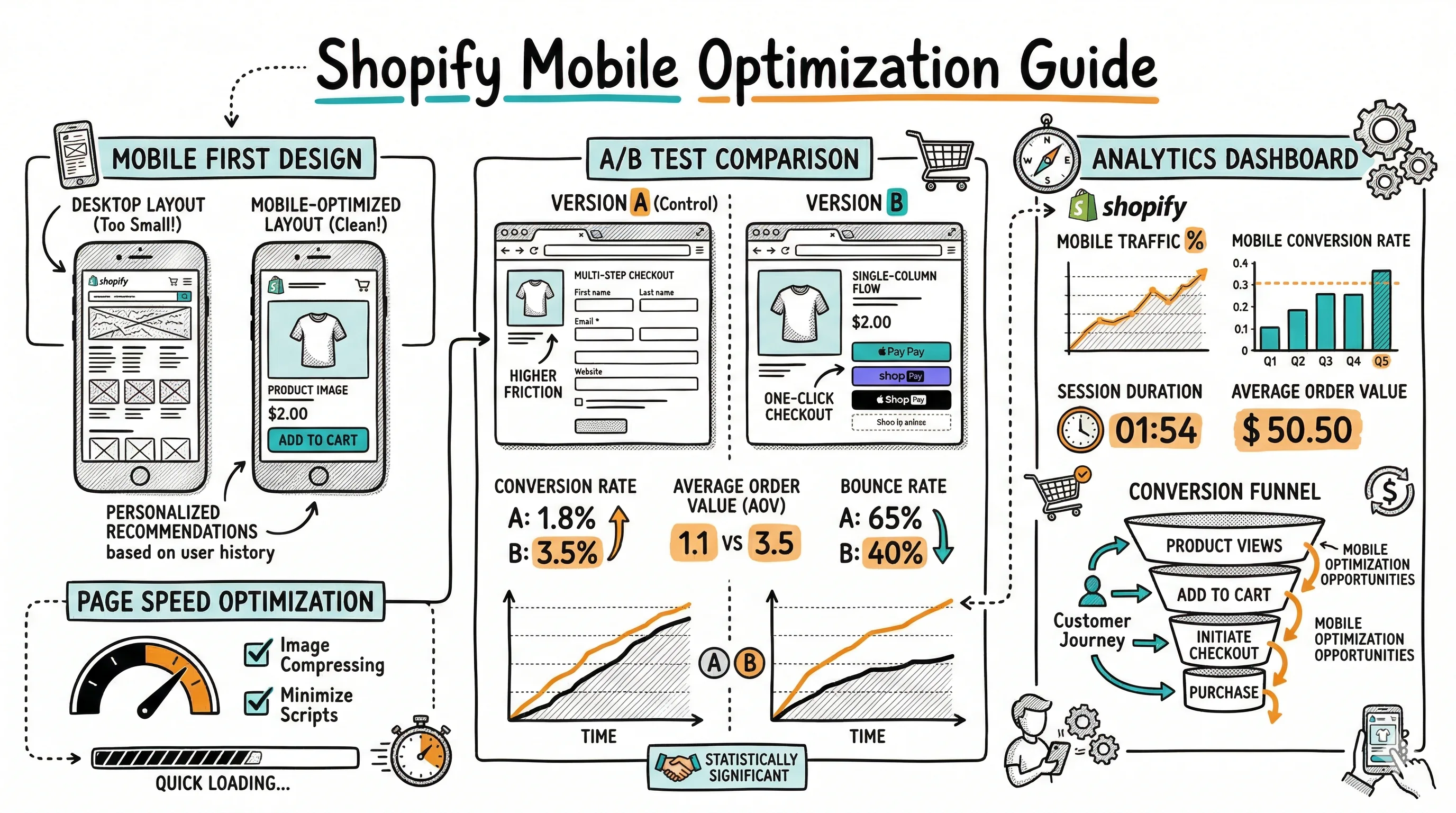
Shopify ranks first for CRO among the major ecommerce platforms. A large app ecosystem, an optimized default checkout, and a growing set of no-code testing tools together make it the most accessible choice for brands serious about conversion optimization.
The Shopify app store has 15+ A/B testing and CRO tools. The leading options:
The advantage that matters most is that most of these tools are no-code. A growth marketer can launch tests in hours. That is not possible on Magento or BigCommerce without developer involvement.
Shopify's standard checkout is among the highest-converting checkouts available. Shopify reports that brands migrating from custom checkout solutions to its native checkout often see 10 to 20 percent conversion improvement from the checkout alone.
Shopify Plus users can customize checkout via checkout extensibility, adding upsells, custom fields, and personalized messaging without replacing the underlying high-converting checkout architecture.
Shopify-hosted stores default to fast hosting with a global CDN. Core Web Vitals performance is generally strong, though app bloat (too many installed apps running JavaScript) can degrade it. A well-managed Shopify store with 3 to 5 apps typically scores 80 to 90 on mobile PageSpeed.
CustomFit.ai's personalization engine, built specifically for Shopify, enables behavioral targeting, UTM-based personalization, segment-specific experiences, and AI-driven content variation without developer involvement.
Total CRO cost on Shopify: ₹8,000 to ₹20,000/month for a serious testing and personalization program (tools plus apps). Developer costs stay minimal if you use no-code tools.
CRO rating: 7/10
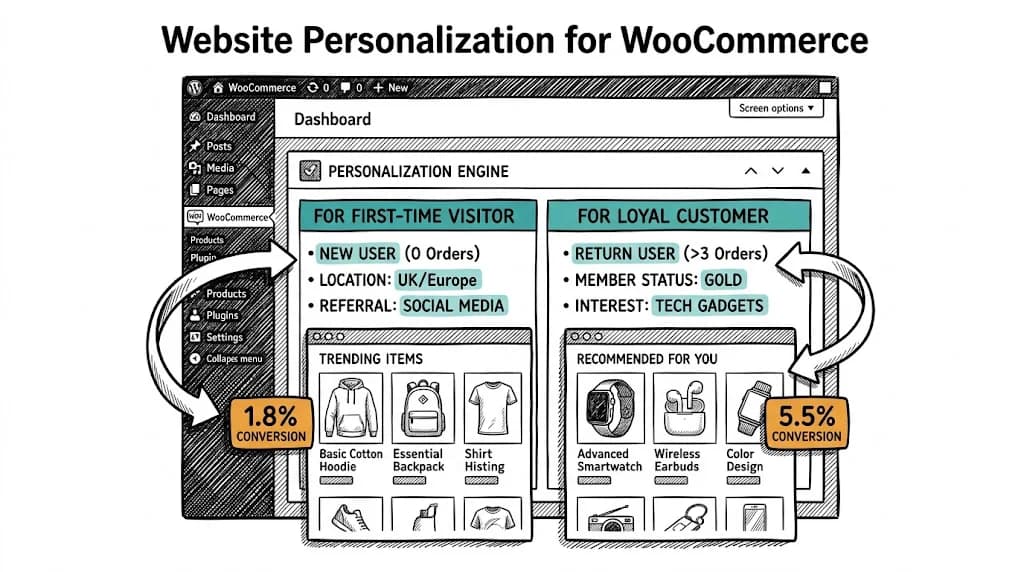
WooCommerce is highly flexible, and you can customize almost anything. That flexibility is also its CRO weakness. More customization means more technical debt, more variables in test results, and more developer dependency.
A/B testing on WooCommerce uses JavaScript-based tools (VWO, Convert) installed via GTM, or WordPress-native plugins (Nelio AB Testing). Neither approach is as clean as Shopify's native app ecosystem.
Developer involvement is usually required for anything beyond basic copy and image testing.
WooCommerce's standard checkout works, but it is not optimized for conversion by default. The newer WooCommerce Checkout Blocks (Gutenberg-based) are better designed, though migration from classic checkout is required. Third-party one-page checkout plugins (like Bolt, CheckoutWC) improve conversion meaningfully.
WooCommerce personalization is possible via plugins (If-So, Barn2) or JavaScript tools, but it requires more configuration than the Shopify equivalents. Behavioral personalization at the sophistication of CustomFit.ai is not available as a native WooCommerce integration.
Total CRO cost on WooCommerce: ₹15,000 to ₹40,000/month, with higher developer costs to configure and maintain testing setups than on Shopify.
CRO rating: 6/10
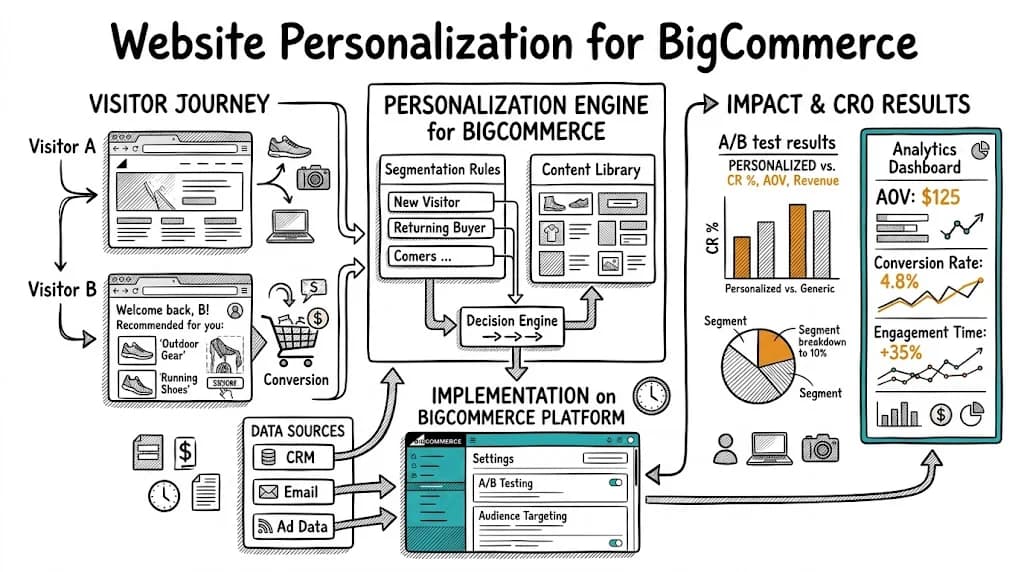
BigCommerce has good performance and a solid feature set, but its CRO ecosystem is smaller than Shopify's and requires more technical involvement.
A/B testing on BigCommerce uses the same JavaScript tool approach as WooCommerce: VWO, Convert, or Optimizely installed via Script Manager. There are no no-code, Shopify-equivalent CRO apps.
BigCommerce's checkout is more locked down than Shopify's standard checkout, which makes checkout testing harder without access to higher-tier plans.
BigCommerce's Optimized One-Page Checkout is well-designed. Testing structural changes requires the Checkout SDK and developer work.
BigCommerce has fewer native personalization options and a smaller personalization app ecosystem. Most personalization requires custom JavaScript implementation.
Total CRO cost on BigCommerce: Similar to WooCommerce, because higher developer dependency increases the cost of running a serious testing program.
CRO rating: 5/10
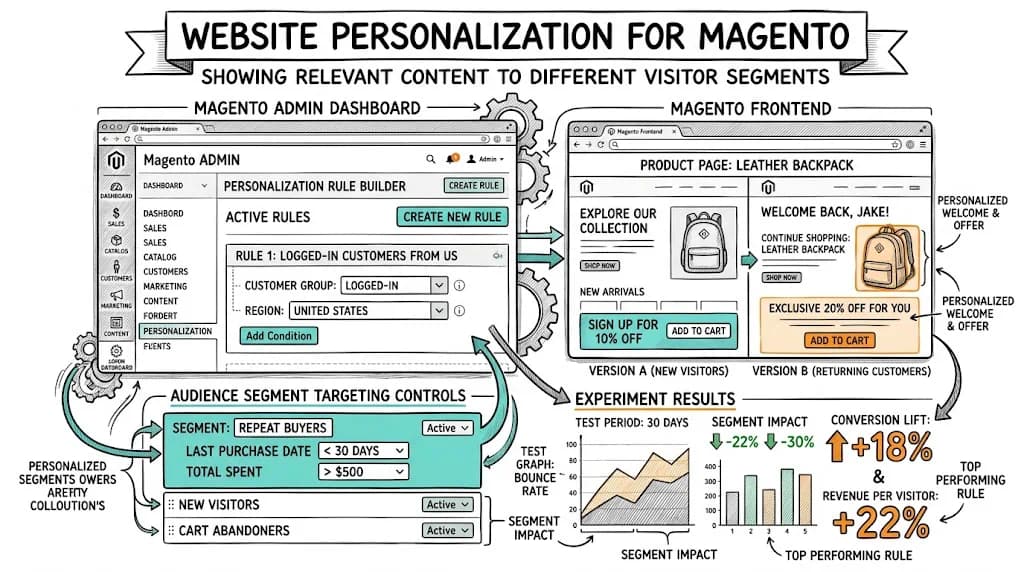
Magento is the most customizable platform on this list, but that customizability comes at significant CRO cost. Testing is technically complex, developer involvement is mandatory for virtually all tests, and the lack of a native CRO app ecosystem means everything is custom-built.
A/B testing on Magento is technically demanding because of full-page caching. Client-side testing tools require specific cache configuration to work correctly. Server-side testing (Adobe Target, Optimizely Full Stack) works better but costs significantly more.
Magento's checkout is highly customizable but requires developer implementation for any changes. That complexity makes it one of the hardest checkouts to A/B test among major platforms.
Adobe Commerce has some native personalization capabilities and integrates with Adobe Target and Adobe Experience Cloud for enterprise-grade personalization. The cost and implementation complexity suit only large enterprise retailers.
Total CRO cost on Magento: ₹50,000 to ₹2,00,000+/month when you factor in developer time for test implementation and maintenance.
| Criteria | Shopify | WooCommerce | BigCommerce | Magento |
|---|---|---|---|---|
| A/B testing accessibility | Excellent | Good | Moderate | Complex |
| No-code testing available | Yes | Partial | No | No |
| Checkout customization | Good | Moderate | Moderate | High but complex |
| Checkout conversion (default) | Excellent | Moderate | Good | Moderate |
| Personalization ecosystem | Excellent | Good | Moderate | Enterprise only |
| Page speed (baseline) | Good | Variable | Good | Variable |
| CRO app ecosystem | Largest | Large | Moderate | Small |
| Developer dependency for CRO | Low | Medium | Medium | High |
| Total CRO cost | Lowest | Moderate | Moderate | Highest |
| CRO Rating | 9/10 | 7/10 | 6/10 | 5/10 |
Choose Shopify if:
Choose WooCommerce if:
Choose BigCommerce if:
Choose Magento if:
Most brands calculate platform cost as monthly subscription fees. The real cost also includes the following.
Developer time for CRO work:
At ₹2,000/hour for developer time, that works out to ₹8,000 to ₹40,000/month in hidden CRO costs on platforms that require developer involvement, which often exceeds the savings from a lower platform subscription fee.
Opportunity cost of test velocity: Each week of developer delay to launch a test is a week of learning lost. If a winning test would lift CVR by 5% and your monthly revenue is ₹50 lakh, each week of delay costs about ₹62,500 in foregone revenue. Platform-dependent test velocity is not free.