From the conversion glossary
Concepts referenced in this article, defined.
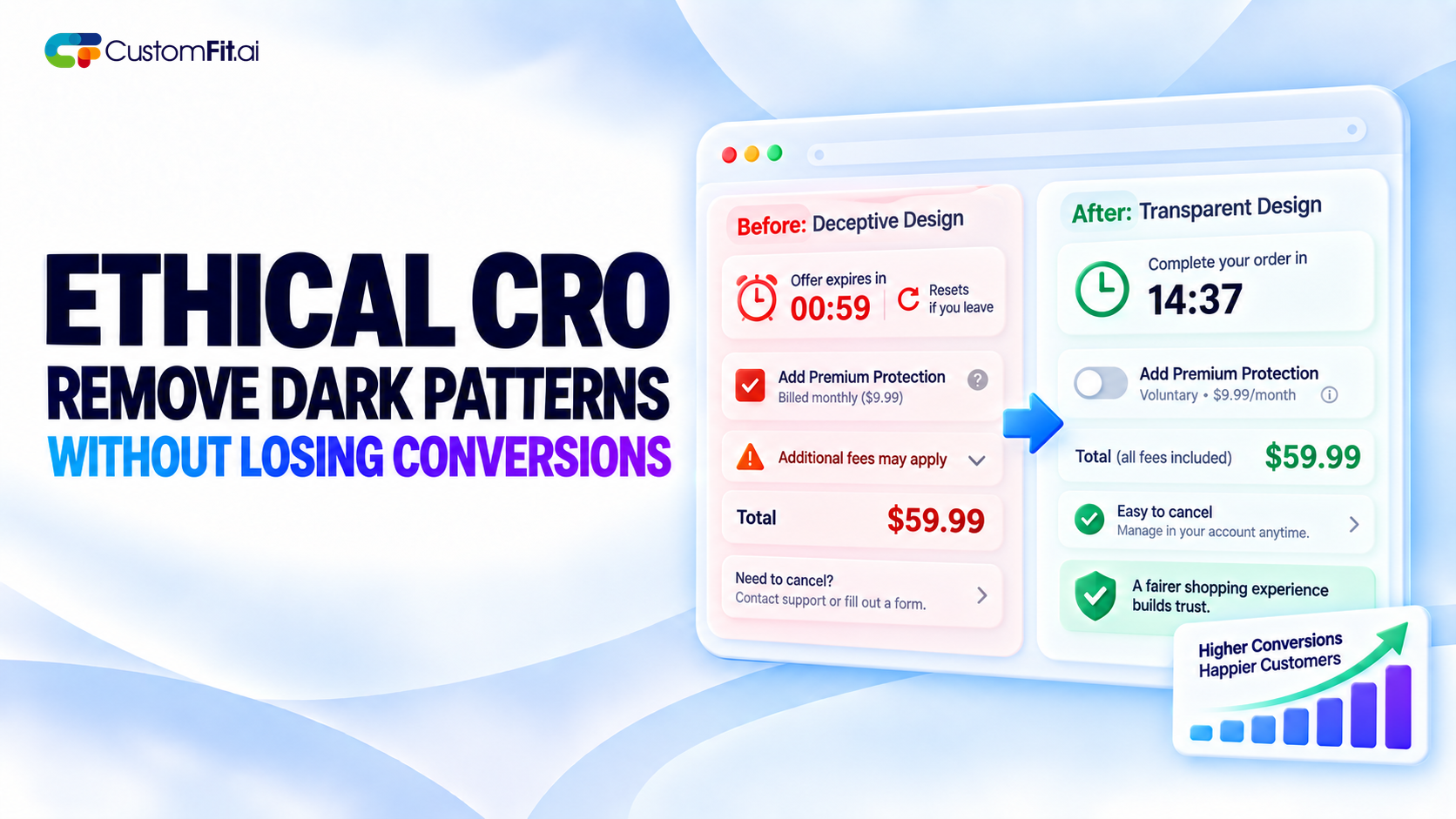
Ethical CRO dark patterns guide — how to remove manipulative checkout tactics from your store without sacrificing the conversion rate they were propping up.
 Yuvraj Singh7 min read
Concepts referenced in this article, defined.
 cro
croAbout page CRO strategies — how to turn your founder story and brand narrative into a genuine conversion driver, not just a page nobody visits.
 cro
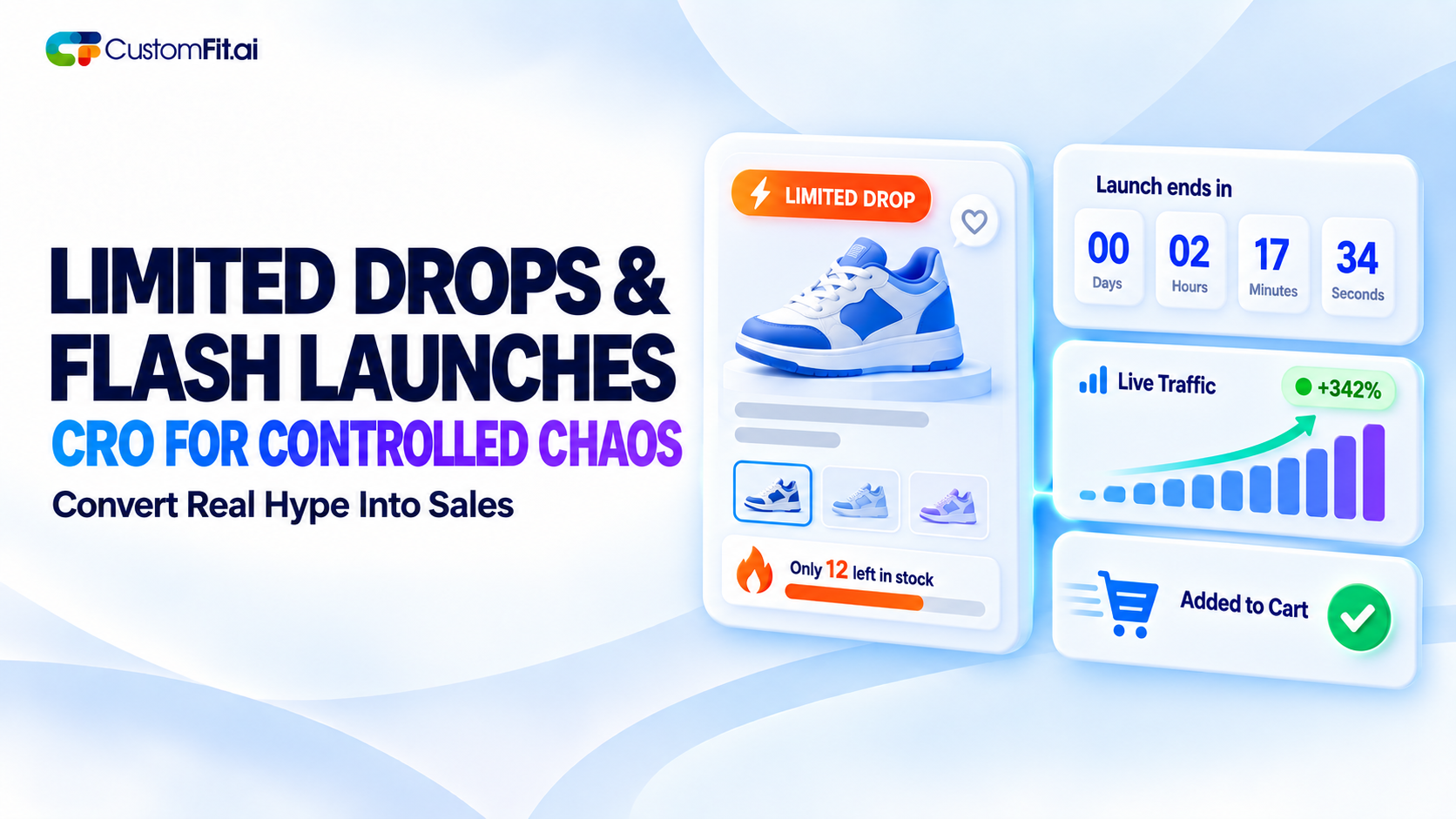
croLimited drop CRO strategies for flash launches — how to design a drop page that converts real hype into sales without the site (or shoppers) melting down.
 cro
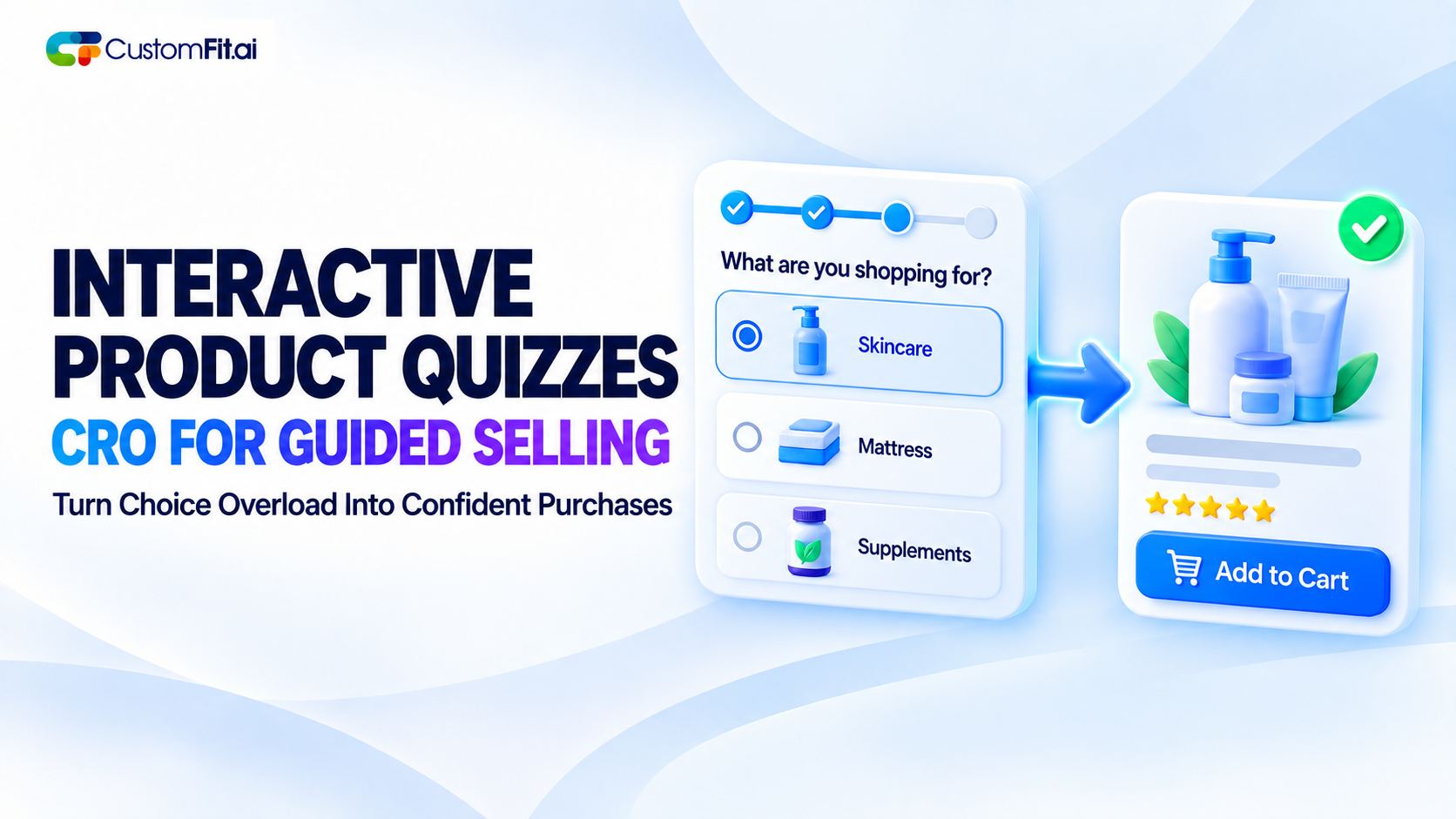
croProduct quiz CRO for ecommerce — how to design a guided selling quiz that actually increases conversion instead of just adding a fun distraction.
Run rigorous A/B tests and personalize every visit on Shopify or any storefront — no engineers required.
A pre-checked add-on box. A countdown timer that resets when you refresh the page. A cancel button hidden three menus deep while the "keep my subscription" option is bright and prominent. These tactics work in the narrow sense that they lift a specific metric in the short term. They also erode the thing conversion optimization is supposed to build over time: a customer who trusts you enough to come back.
Ethical CRO dark patterns work is about identifying where your funnel is quietly using manipulation instead of persuasion and fixing it — without assuming that removing the trick automatically means losing the sale.
Not every persuasive tactic is manipulative. Genuine scarcity, a real limited-time offer, or a clearly labeled default option are legitimate parts of conversion design. The line dark patterns cross is deception — creating a false impression, hiding information the shopper needs, or making the action you want disproportionately easier than the action they actually intend to take.
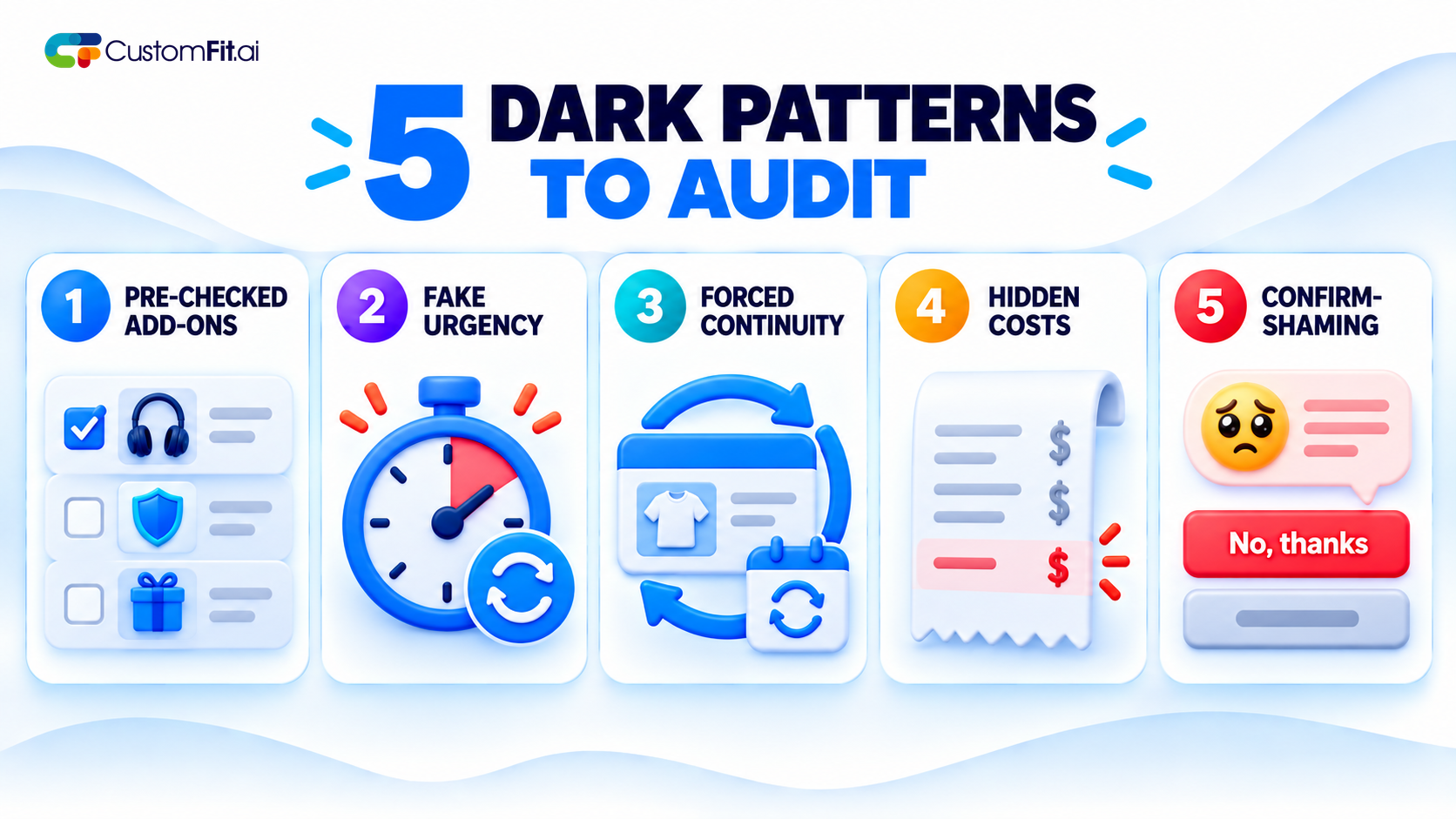
Common examples worth auditing your own site for include fake urgency, such as a timer or stock count that isn't real; confirm-shaming, such as a decline button worded to guilt the shopper; forced continuity, such as a free trial that silently converts to a paid subscription with no clear reminder; hidden costs revealed only at the final checkout step; and pre-selected add-ons or subscriptions a shopper has to notice and uncheck actively.
Regulators are increasingly paying attention. Dark pattern practices have drawn scrutiny and enforcement action in several jurisdictions, and that regulatory risk is growing, not shrinking.
Even setting compliance aside, dark patterns tend to produce a specific, measurable cost: elevated chargebacks, more support tickets, worse reviews, and higher long-term churn from customers who feel tricked, even if the short-term conversion number looks good.
Dark pattern removal ecommerce work is not purely an ethical project. It is frequently a legitimate long-term revenue project wearing an ethics label.
Review every default and pre-selected option. Anything pre-checked on a shopper's behalf — an add-on, an upsell, or a subscription — should be genuinely optional and clearly visible as a choice, not something requiring active effort to decline.
Check your urgency and scarcity messaging against reality. If a countdown timer or stock counter doesn't reflect something actually true and time-bound, it is a dark pattern regardless of how effective it has been.
Trace your cancellation or unsubscribe flow from start to finish. If canceling a subscription requires meaningfully more steps, more time, or more friction than signing up did, that asymmetry is a dark pattern — and often a specifically regulated one.
Look for hidden costs revealed late in checkout. Shipping fees, taxes, or mandatory add-ons that appear only at the final payment step, after a shopper has invested time in the flow, are a classic and increasingly scrutinized dark pattern.
Read your decline and opt-out button copy critically. Confirm-shaming language — wording a "no" option to make the shopper feel foolish or guilty — is manipulative regardless of how common it has become across the industry.
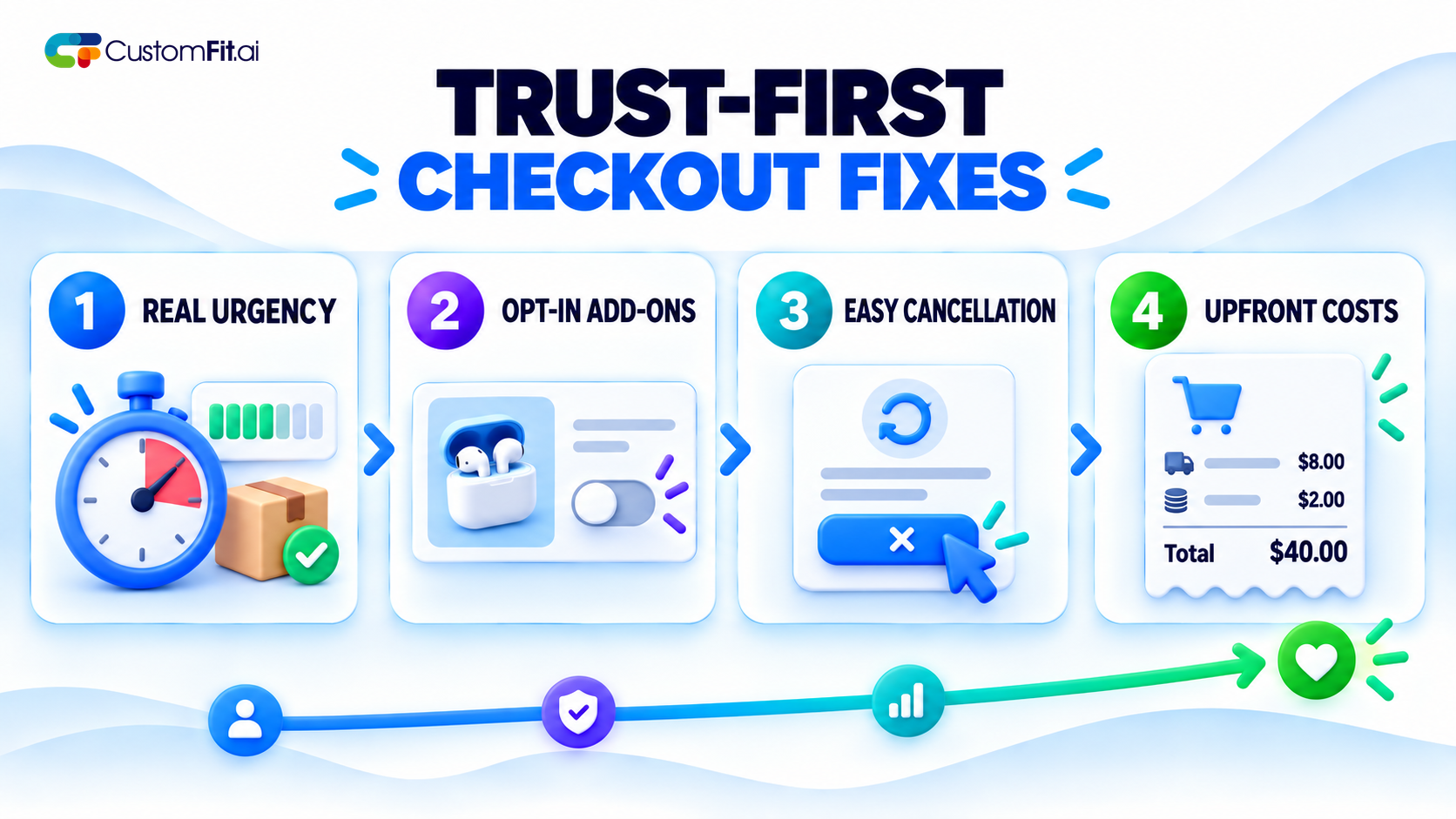
Replace fake urgency with real, transparent constraints. If genuine scarcity exists — actual limited stock or an actual sale end date — communicate it clearly. That is persuasive without being deceptive, and it does not require removing the tactic, only making it honest.
Make optional add-ons opt-in, then test genuinely persuasive reasons to add them. Removing a pre-checked upsell does not mean removing the upsell entirely. It means asking for the choice honestly and making the case for it, which converts a smaller but more durable share of shoppers who actually want the add-on.
Simplify the cancellation process and measure its real effect. Companies often overvalue the degree to which a cumbersome cancellation process boosts revenue. An easy cancellation process can reduce chargebacks and improve the chance of recovering customers faster than it hurts immediate retention.
Move all costs earlier in the flow, not just to final payment. Showing shipping and estimated taxes on the cart page, rather than revealing them for the first time at checkout, reduces the abandonment spike that late fee reveals reliably create.
The useful mental shift is treating trust as a conversion metric in its own right, not something separate from conversion rate that gets traded off against it. A shopper who feels respected and informed may sometimes convert at a lower rate on a single visit, but returns, refers others, and does not generate the support and reputation costs a manipulated shopper eventually does.
Trust-first conversion optimization has a longer time horizon than a single A/B test cycle, and it is worth measuring accordingly — lifetime value and repeat purchase rate, not just first-session conversion.
The most common mistake is assuming every dark pattern removal will cost conversion rate without testing the honest alternative. In many cases, transparent design converts nearly as well, and the difference is more than made up for in reduced chargebacks and improved retention.
The second is fixing obvious dark patterns, such as fake countdowns, while leaving subtler ones in place — confirm-shaming copy, pre-checked add-ons — that are just as damaging to long-term trust.
Ethical CRO dark patterns work is not a constraint on conversion optimization. It redirects optimization toward metrics that actually compound over time. A store that earns trust converts less aggressively in the short term and considerably better over a customer's full lifetime.
Removing manipulation from your funnel is not giving up on persuasion; it is replacing tactics that work once with ones that keep working.