From the conversion glossary
Concepts referenced in this article, defined.
First purchase experience optimization - practical strategies to turn first-time visitors into buyers, from welcome offers to a smarter new customer funnel.
Concepts referenced in this article, defined.
 cro
croRetail media CRO explained - how to monetize on-site ads and sponsored placements without tanking your conversion rate. A practical balance guide.
 cro
croAI Overviews and zero-click search are reshaping how shoppers find products. Here's the real ecommerce impact, and how to adapt your conversion funnel.
 cro
croA practical guide to conversion rate optimization for direct-to-consumer brands — covering product pages, checkout, homepage, and the full D2C funnel with real tactics that work.
Run rigorous A/B tests and personalize every visit on Shopify or any storefront — no engineers required.
Most ecommerce sites spend far more effort optimizing for customers they already have than for people who have just arrived. That is understandable: returning customers convert at multiples of new-visitor rates, and it is tempting to focus energy where the numbers already look good. But for almost every growing D2C brand, first-time visitors make up the majority of traffic. Their first experience determines whether they ever become customers at all.
First purchase experience optimization means treating that first visit as a genuinely different problem from optimizing for repeat buyers, not as a smaller version of the same funnel.
A returning customer already trusts your brand, knows your sizing, and has probably read reviews before. A first-time visitor has none of that context. Every trust signal, policy detail, and piece of social proof that a repeat customer skips without noticing is doing real persuasive work for someone seeing your brand for the first time.
That means a new visitor conversion strategy cannot simply be "the same site, but hoping they convert anyway." The homepage, product pages, and offers often need a different emphasis for someone with no prior context.
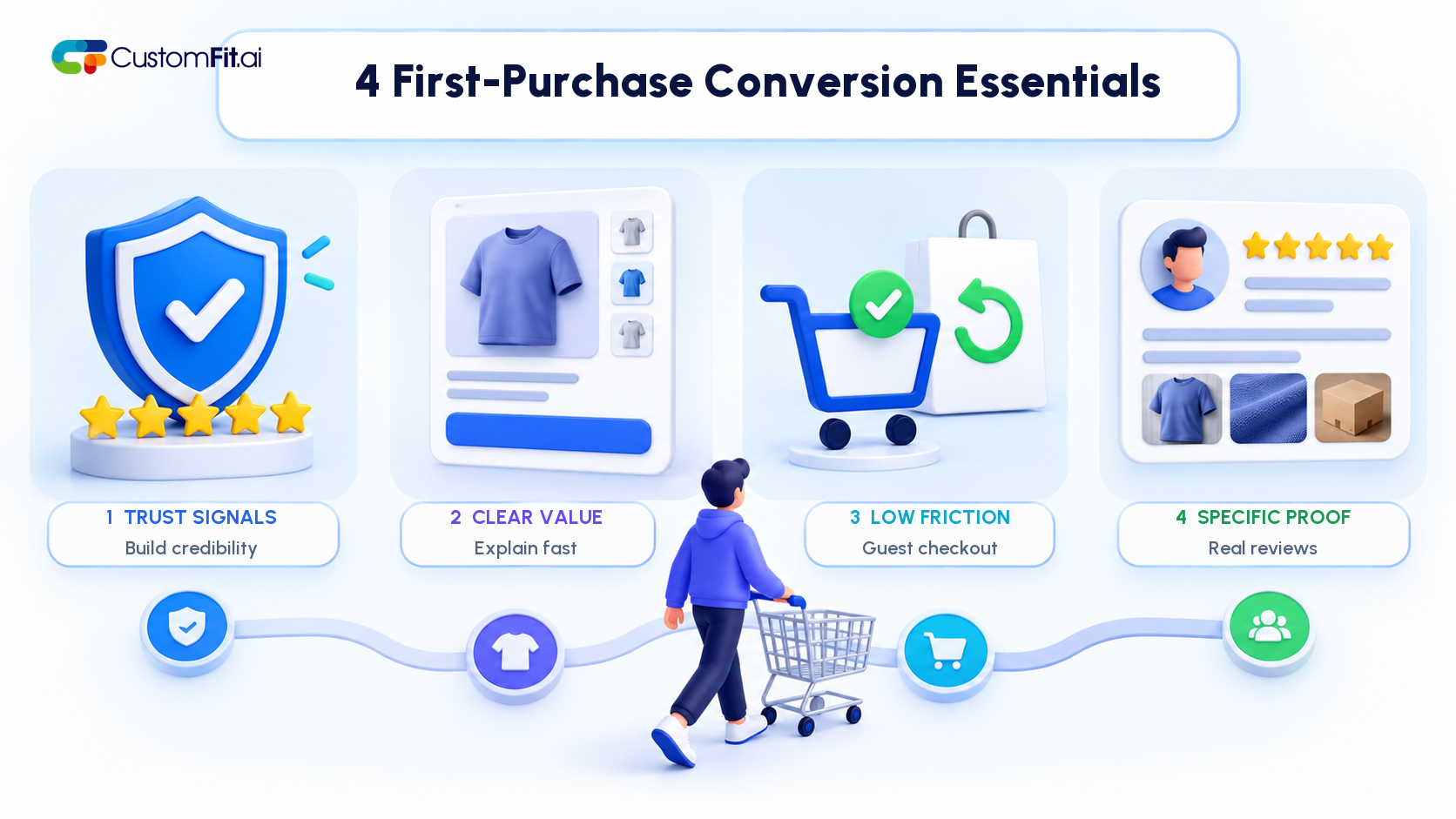
Immediate credibility signals. A first-time visitor is silently asking, "Is this a real, trustworthy brand?" before asking anything about the product. Visible reviews, recognizable trust badges, clear contact information, and professional design answer that unspoken question within the first few seconds.
Clarity over cleverness. Brand voice and personality matter, but a first-time visitor needs to understand what you sell and why it is valuable within seconds. Clever, ambiguous copy that a loyal customer might find charming can simply confuse someone with no context.
A frictionless, low-commitment first step. First-time buyer CRO benefits enormously from reducing the initial ask. Guest checkout, no forced account creation, and a genuinely easy return policy all lower the psychological barrier to buying from a brand someone does not know yet.
Social proof that is specific, not generic. "Loved by thousands of customers" does less persuasive work than a specific, detailed review with a real name and a genuine use case. First-time visitors want proof that people like them had a good experience.
A discount or welcome offer is one of the most common first-purchase levers, and one of the most frequently mishandled. A few details are worth getting right.
Make the offer visible without being obnoxious. A first-purchase discount that visitors must hunt for is not doing its job. But showing an aggressive popup within two seconds of arrival can damage the trust you are trying to build.
Match the offer to genuine hesitation, not habit. If price is the biggest objection, a discount makes sense. If the real concern is fit or quality, a strong guarantee or free-returns policy may convert better than a percentage discount.
Avoid training every visitor to expect a discount. An overly generous, always-on welcome offer can erode margins and condition potentially loyal customers to wait for a deal. Test more conservative offers against your default periodically.
Time the ask instead of showing it immediately. For some brands, a welcome offer displayed after a visitor has shown engagement, such as viewing two products or spending 30 seconds on a page, converts better than one shown the instant everyone lands. It targets people who have demonstrated real interest.
Separate first-time and returning visitor experiences where it matters. Personalization tools can detect new versus returning visitors and adjust messaging, offers, and homepage content accordingly. This does not need to be complex to be effective.
Display trust signals on the pages where new visitors land. If much of your new traffic comes from an advertisement to a product page, that page should show the reviews and guarantees needed to build confidence.
Make your return and shipping policy impossible to miss. For a first-time buyer, fear of a bad return experience is often a bigger barrier than price. Surface a clear, generous policy prominently instead of burying it in the footer.
Follow up quickly when a visitor does not convert. A well-timed abandoned browse or cart email, written for someone who has never bought from you before, can recover visitors who needed a second nudge.
Track first-purchase conversion as its own metric. A blended conversion rate can hide a serious first-time visitor problem behind strong returning-customer performance. Segment the data to see the true picture.
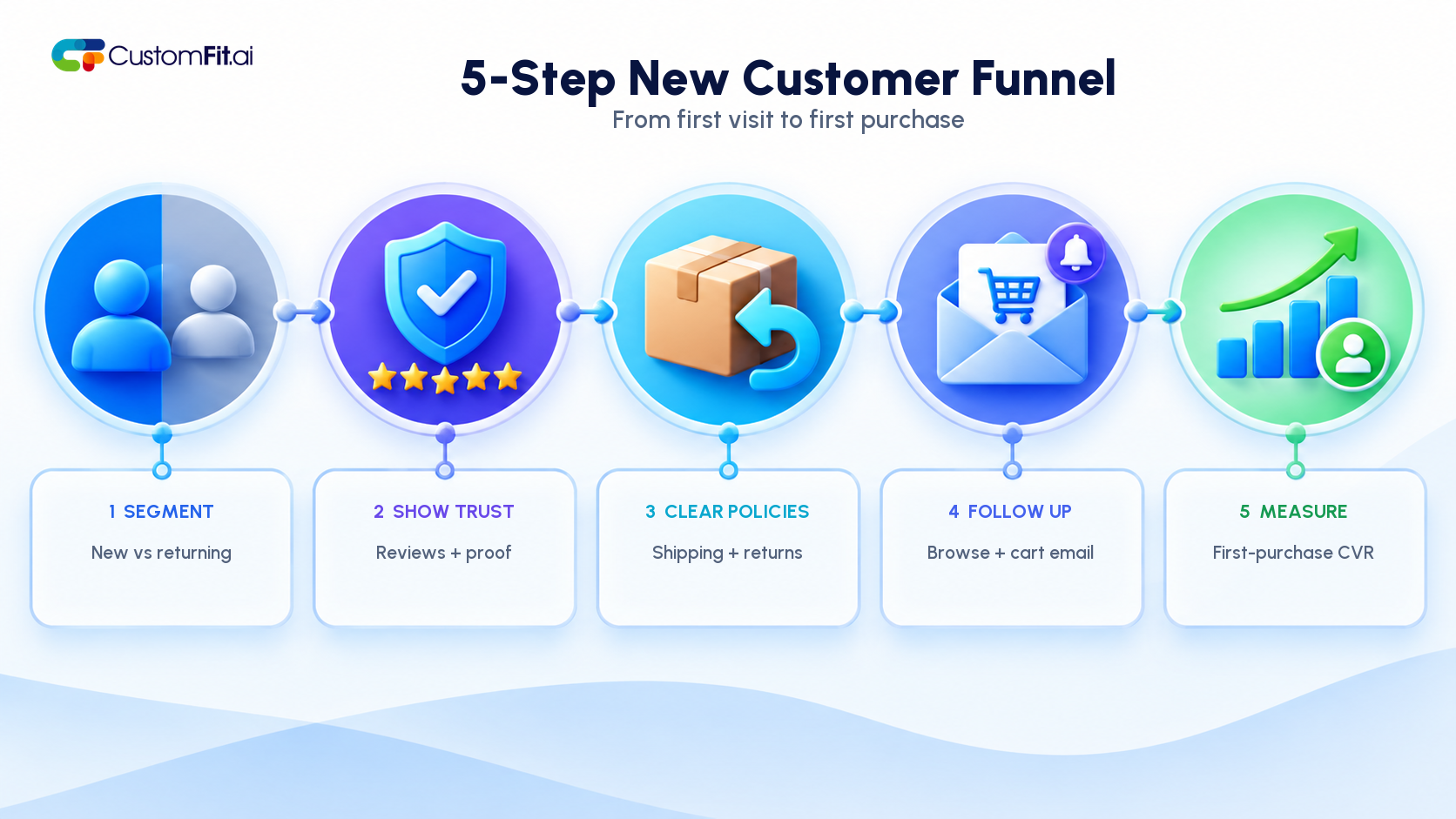
The most common mistake is designing the entire site around returning customers who already trust the brand, then wondering why first-time conversion lags. Trust signals and clarity that feel redundant to a loyal customer are often exactly what a stranger needs most.
The second mistake is relying on a blunt, aggressive discount as the only lever. For many first-time hesitations, clarity, proof, and a low-risk return policy do more persuasive work than a percentage discount.
First purchase experience optimization deserves the same deliberate attention most brands give to returning customers. For most growing stores, the first visit is where the majority of the funnel lives.
Getting trust signals, the offer, and friction right for someone seeing your brand for the first time is often the highest-leverage CRO work available, precisely because it is the part most sites still treat as an afterthought.