From the conversion glossary
Concepts referenced in this article, defined.
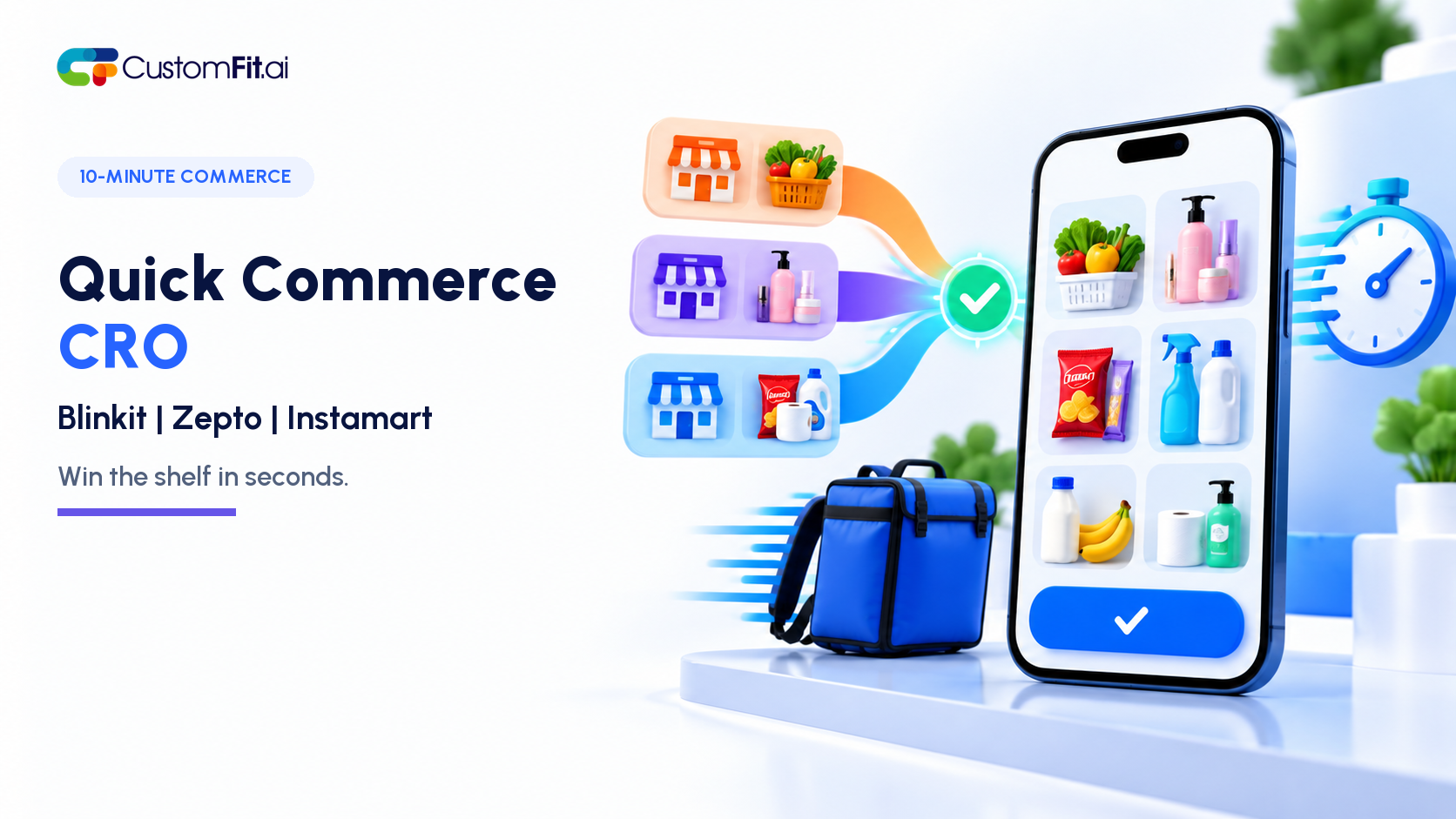
Quick commerce conversion optimization for D2C brands selling on Blinkit, Zepto, and Instamart - how 10-minute delivery changes the CRO playbook.
 Yuvraj Singh6 min read
Concepts referenced in this article, defined.
 d2c ecommerce
Wishlist feature impact on conversions and retargeting: how to use wishlists to reduce purchase barriers, capture demand signals, and build powerful retargeting audiences.
 d2c ecommerce
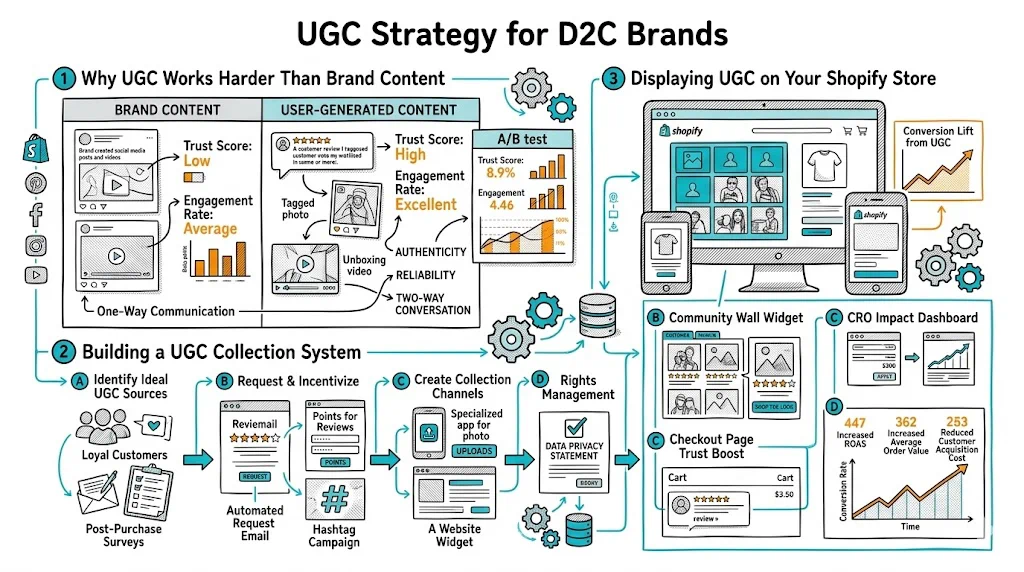
Build a UGC strategy for your D2C brand: how to collect, curate, and use customer photos and videos to increase conversion rates and reduce paid ad costs.
 d2c ecommerce
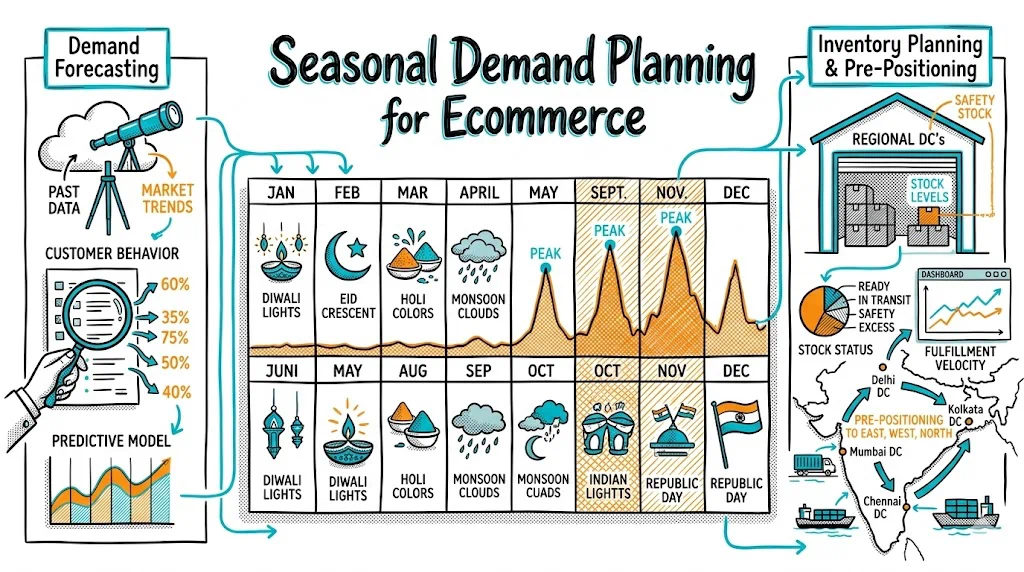
Seasonal demand planning for ecommerce: how Indian D2C brands forecast festive demand, manage inventory, and optimize conversions during Diwali, Holi, and sale events.
Run rigorous A/B tests and personalize every visit on Shopify or any storefront — no engineers required.
A shopper opens Blinkit because they need something in the next ten minutes, not because they're browsing. That single fact changes almost everything about how conversion works. There's no leisurely comparison shopping, no reading five reviews before deciding, no wishlist to circle back to next week. Either your product gets picked in the next few seconds of scrolling, or it doesn't get picked at all.
Quick commerce conversion optimization is a genuinely different discipline from standard ecommerce CRO, and D2C brands that treat their Blinkit, Zepto, and Instamart storefronts like a smaller version of their own website are leaving conversions on the table.
Most CRO advice assumes a shopper has time and attention to spend - comparing options, reading detailed descriptions, and checking multiple reviews. Ten-minute delivery conversion works on the opposite assumption: the shopper has already decided roughly what they want and is choosing between very similar options in a tiny visual space, at speed, often one-handed on a phone while doing something else.
That means the things that usually matter most in ecommerce CRO - a compelling long-form product description, a rich image gallery, detailed comparison content - barely register here. What matters instead is whatever a shopper can process in the half-second their thumb hovers over your listing.
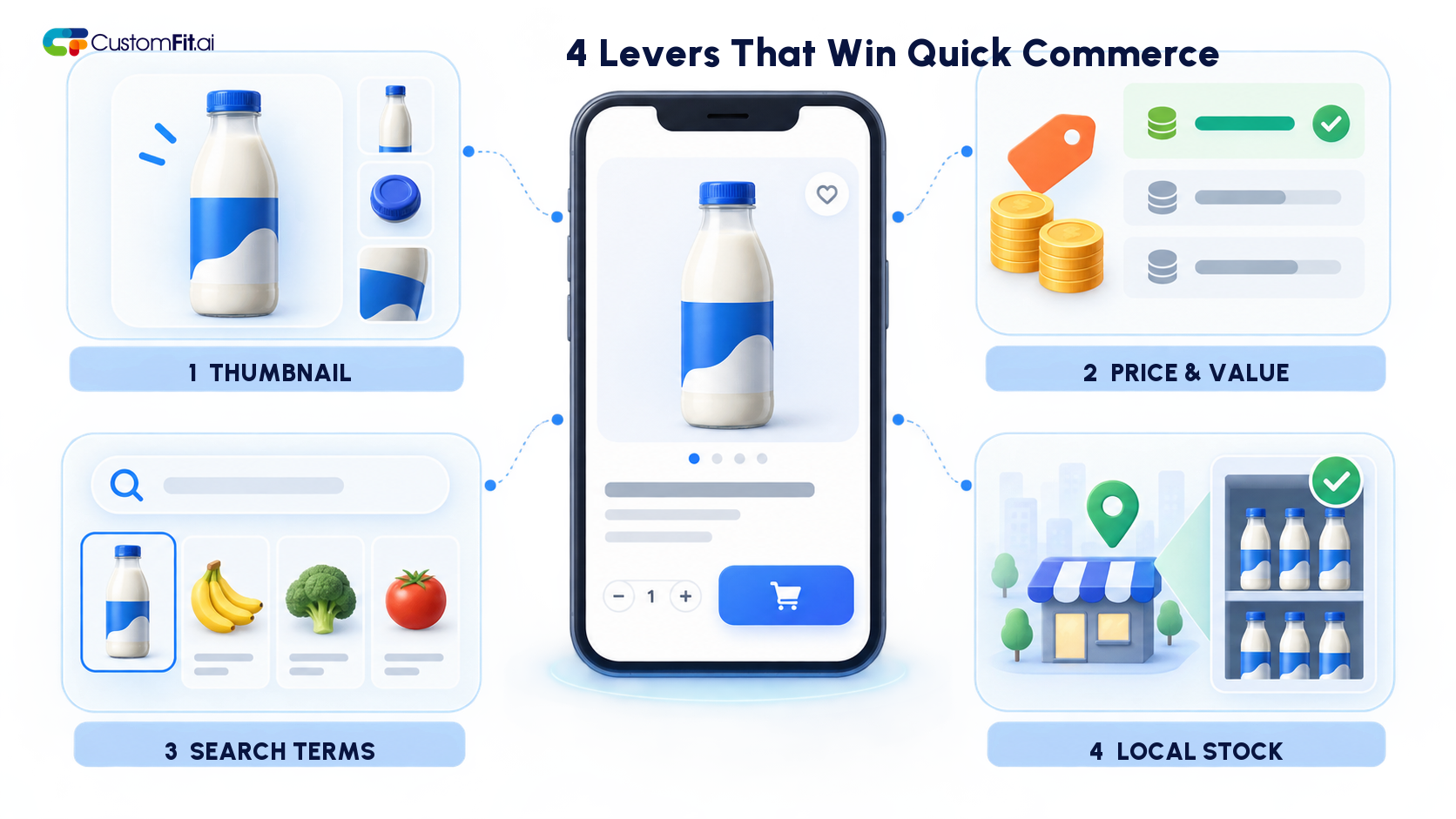
Thumbnail and pack image quality. On a grid of similar products, the image is doing almost all of the persuasive work a product page normally does. A cluttered, low-contrast, or unclear thumbnail loses to a clean, recognizable one before a shopper reads a single word.
Price visibility and perceived value. Quick commerce shoppers are often comparing your price against a near-identical product one tile away. Clear pack size, price-per-unit clarity, and any visible discount matter more here than a persuasive tagline would.
Search term coverage. A meaningful share of quick commerce discovery happens through in-app search, not browsing. If your product listing doesn't include the terms a shopper would actually type - including common misspellings or category-adjacent terms - you're invisible for that search entirely, regardless of how good your product is.
Stock availability and dark store coverage. A great listing means nothing if it shows unavailable in a shopper's specific dark store zone. Quick commerce CRO for a D2C brand includes making sure distribution and inventory placement actually match where demand exists, which is closer to a supply chain problem wearing a CRO hat.
Each quick commerce platform has its own search ranking logic, sponsored placement options, and content requirements, so a listing optimized for one doesn't automatically perform the same on another.
Zepto storefront optimization, similarly to Blinkit, rewards clear, fast-scanning product presentation. But brands that run identical assets and copy across every platform without checking how each one actually renders listings often find inconsistent performance that has nothing to do with the product itself and everything to do with formatting mismatches.
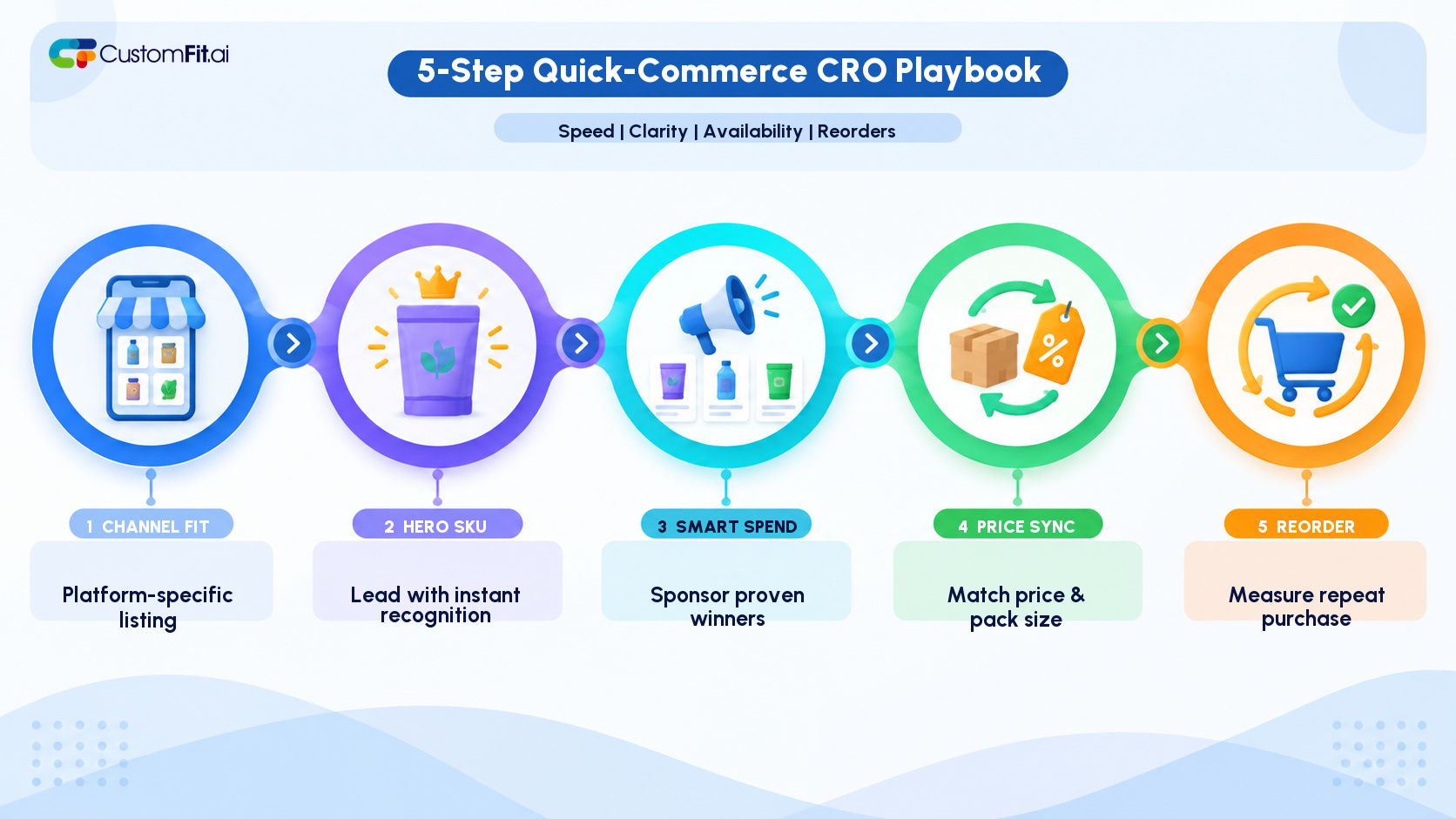
Treat quick commerce as a distinct channel with its own content, not a repurposed Amazon listing. The images, pack sizes, and even SKU mix that work on your own website or a traditional marketplace often need real adaptation for a ten-minute-delivery shopper.
Prioritize your fastest-moving, most recognizable SKUs. Quick commerce isn't the place to introduce your most complex or unfamiliar product. Lead with what a shopper can understand and trust in a glance.
Use sponsored placement strategically, not as a substitute for a weak listing. Paid visibility gets you seen; it doesn't fix a confusing thumbnail or an uncompetitive price once the shopper is actually looking at your product next to a competitor's.
Monitor cross-platform consistency in pricing and pack size. Consumers increasingly use different quick commerce applications before placing their orders. Any visible difference in pricing or size information while comparing apps like Blinkit and Zepto undermines the credibility of both prices.
Watch reorder behavior as your real success metric. Quick commerce over-indexes on impulse and replenishment purchases. A strong first conversion that doesn't lead to reorders often points to a product-market mismatch for this channel specifically, not a listing problem.
Long-form storytelling, detailed ingredient explainers, and rich comparison content - all genuinely valuable on your own D2C site - largely don't get consumed in a quick commerce context. That's not a flaw in the format; it reflects a fundamentally different shopper intent. Content depth that helps conversion on your website can be almost entirely wasted effort inside a ten-minute-delivery app.
The most common mistake is launching on Blinkit, Zepto, or Instamart with the same photography and copy built for a considered-purchase D2C website, then wondering why conversion underperforms. The shopper's mindset and available attention are completely different.
The second is treating distribution and dark store coverage as purely a supply chain concern, disconnected from CRO, when a perfectly optimized listing that's simply unavailable in a shopper's area converts at zero no matter what else is done right.
Quick commerce conversion optimization isn't a smaller version of ecommerce CRO. It's a different discipline built around speed, glanceability, and availability rather than persuasion and consideration. D2C brands that build platform-specific listings, prioritize clarity over storytelling, and treat distribution as part of the conversion equation will consistently outperform brands that just port their website content over and hope it works.