From the conversion glossary
Concepts referenced in this article, defined.
Does eco-friendly copy actually help sales? Learn how sustainability messaging CRO works, which green claims earn trust, and what to A/B test on your product pages.
Concepts referenced in this article, defined.
 cro
croLearn how to set up live selling on your own website, keep shoppers from leaving, and test what turns live viewers into buyers. A practical live selling website CRO guide.
 cro
croGen Z shopping behavior CRO — the real differences in how Gen Z and Millennial shoppers browse, decide, and check out, and what to actually test.
 cro
croEthical CRO dark patterns guide — how to remove manipulative checkout tactics from your store without sacrificing the conversion rate they were propping up.
Run rigorous A/B tests and personalize every visit on Shopify or any storefront — no engineers required.
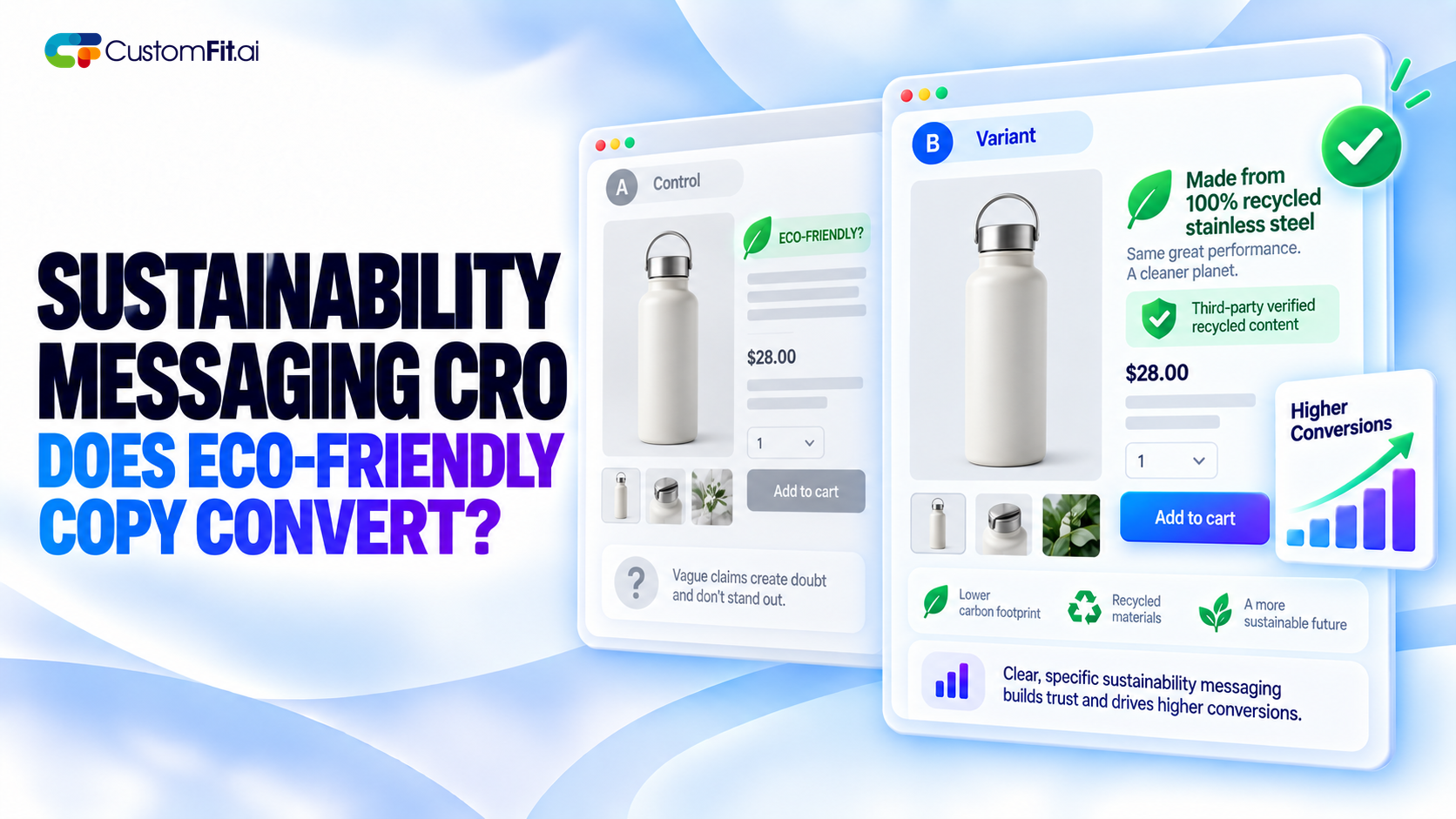
Plenty of brands put "eco-friendly" on a product page and wait for sales to go up. Sometimes they do. Often nothing happens, and occasionally the claim makes shoppers more doubtful than before.
That is why sustainability messaging CRO is worth treating as a testing problem rather than only a branding decision. Whether green copy helps depends on what you say, where you say it, and whether shoppers believe you. You cannot know any of that without testing it.
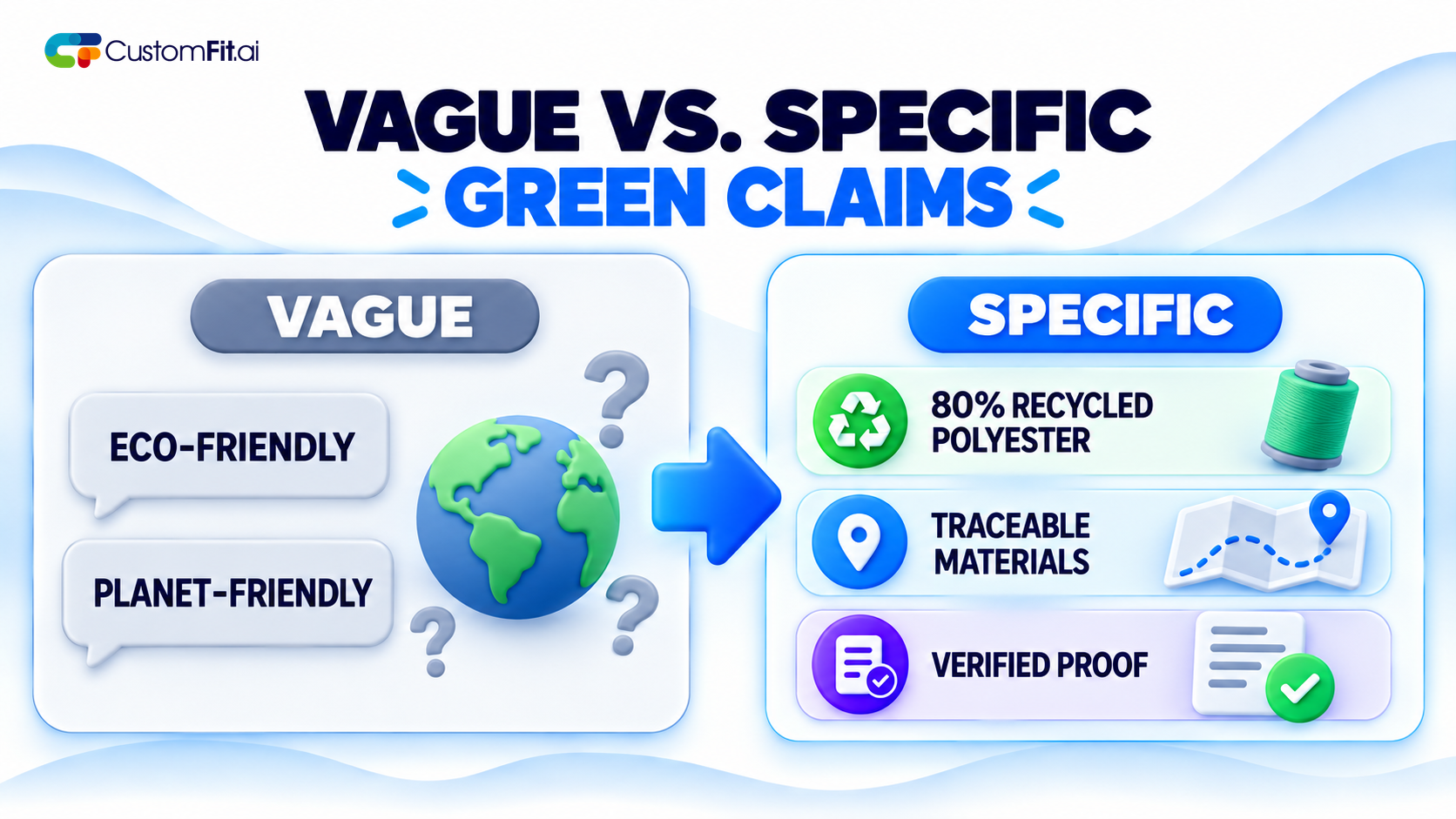
Most shoppers have seen the phrase a thousand times. It is attached to everything from bamboo toothbrushes to fast fashion, so it has stopped meaning anything. When a claim is vague, people read it as marketing and move on.
Some shoppers go further and become suspicious. Greenwashing is a well-known idea now, and regulators in several countries have started pursuing vague environmental claims. A badge that says "green" with nothing behind it can make your brand look as though it is hiding something.
The pattern is simple: the less specific the claim, the less it is worth.
Compare these two lines:
The second one gives the shopper something to check, picture, and repeat to a friend. Numbers, materials, places, and certifications all do the same job: they turn a feeling into a fact.
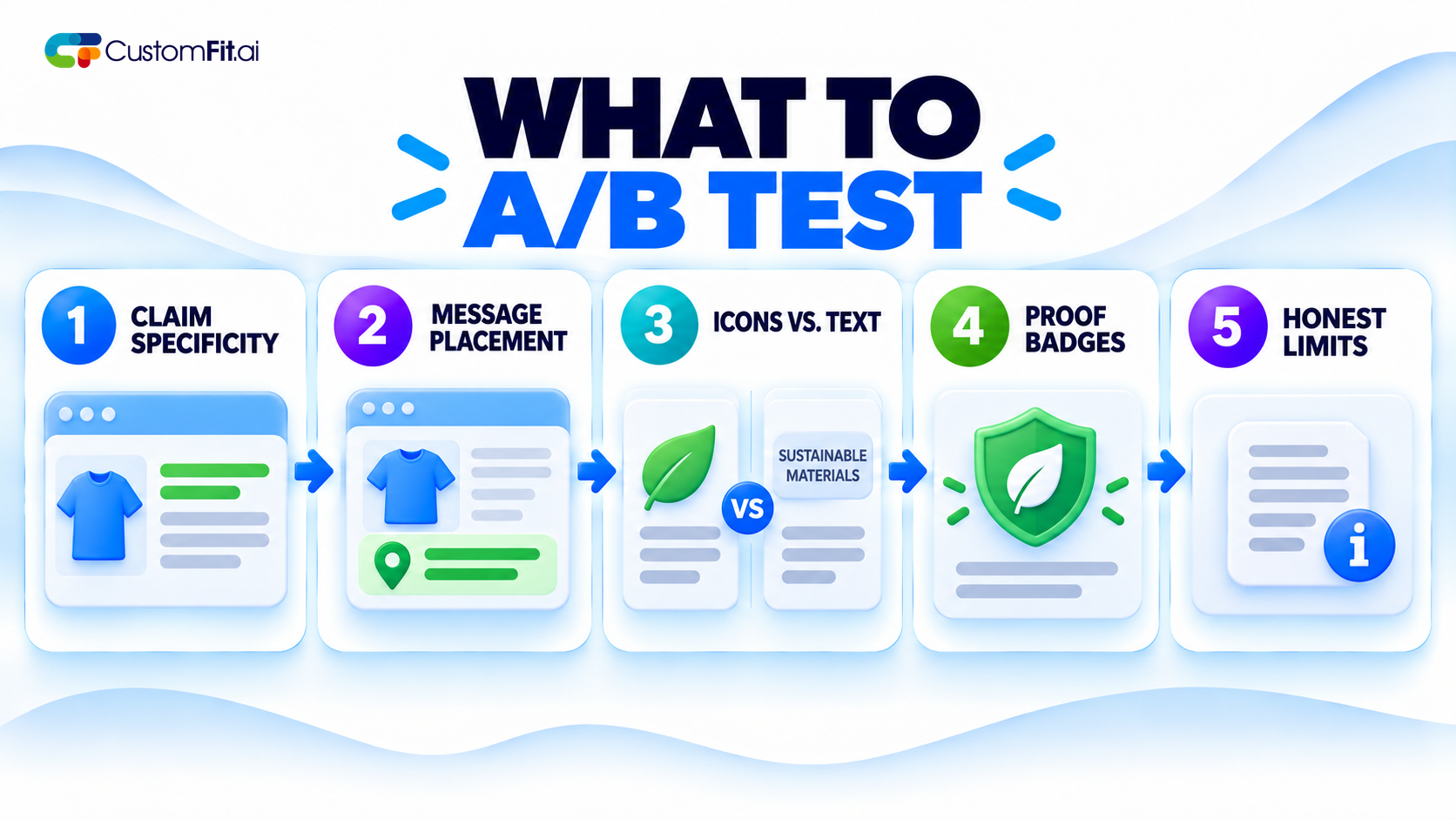
The first test on most stores is straightforward: take your vaguest green line and replace it with a concrete one. Keep everything else on the page the same.
A lot of brands bury sustainability on a separate "Our Impact" page that almost nobody visits. Shoppers who care about it should see it where they are making the decision.
Try these placements against each other:
You will often find that a small, quiet mention near the price does more than a big banner. A loud claim invites doubt. A calm one reads like a detail.
Third-party proof does more than your own words. If you hold a real certification, show it and explain what it means in plain language. "Certified B Corp" or "GOTS organic cotton" means little to many shoppers until you add a sentence explaining it.
Other things that help include:
That last point often surprises people. Honesty about limits can make the rest of your claims more believable. It is also much safer legally than overclaiming.
Shoppers say they will pay more for sustainable products, but their behavior at checkout is often different. If your product costs more because of better materials, the message must justify the difference quickly.
Test whether explaining the price helps. A line such as "Costs a little more because we pay our workers a living wage" can work well for some audiences and badly for others. This is a good example of something you should test rather than assume.
Measure more than conversion rate. Look at add to cart rate, bounce rate and return rate. Sometimes a claim that does not change conversion still lowers returns because shoppers know what they are getting.
Eco-friendly copy can convert, but only when it is specific, believable, and placed where shoppers are making a decision. Treat each claim as a hypothesis, test it, and let your own visitors tell you which version they trust.